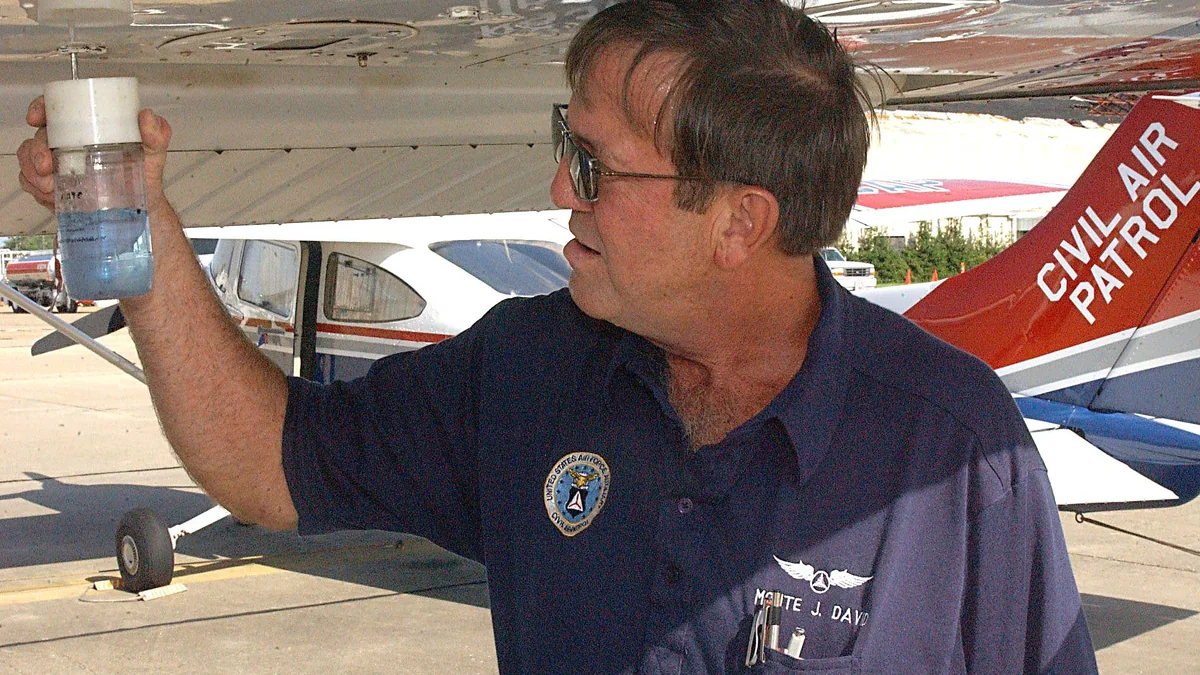
Most pilots learn the walk-around properly: drain the fuel, check the oil, wiggle the control surfaces. The other half of preflight, the briefing at the desk, tends to shrink with experience until it becomes a glance at the weather app. Yet in its Safety Sense leaflet on good airmanship, the UK Civil Aviation Authority says that any review of general aviation accidents shows most of them should not have happened, and lists "lack of preparation before flight" among the factors behind them. This guide covers what the rules actually require, and a practical checklist you can run before every VFR flight, short or long.
What the rules require
Europe: SERA and Part-NCO
In EASA countries two sets of rules apply to a private VFR flight. The Standardised European Rules of the Air, SERA.2010(b), say that before beginning a flight the pilot-in-command "shall become familiar with all available information appropriate to the intended operation". For flights away from the vicinity of an aerodrome, that includes "a careful study of available current weather reports and forecasts, taking into consideration fuel/energy requirements and an alternative course of action if the flight cannot be completed as planned".
Part-NCO, the operating rules for non-commercial flying in other-than-complex aircraft, adds detail:
- NCO.OP.135 Flight preparation: the pilot-in-command must check "by every reasonable means available" that the facilities directly required for the flight, including communication facilities and navigation aids, are adequate, and must be familiar with all available meteorological information. For a flight away from the vicinity of the departure aerodrome, preparation must include a study of current reports and forecasts and the planning of an alternative course of action in case the weather stops the flight from being completed as planned.
- NCO.GEN.105 Pilot-in-command responsibilities: you may only start a flight if you are satisfied that the aircraft is airworthy and duly registered, the required instruments and equipment are installed and working, the mass and centre of gravity are within limits, baggage and cargo are properly loaded and secured, and the flight manual limitations will not be exceeded. You must also not start a flight if you are unfit through injury, sickness, fatigue or any psychoactive substance.
- NCO.OP.130 Passenger briefing: passengers must be briefed on emergency equipment and procedures. The acceptable means of compliance lists seat belts and, where fitted, emergency exits, life jackets and other emergency equipment.
United States: 14 CFR 91.103
The FAA's preflight action rule starts with the same idea: each pilot in command must, before beginning a flight, "become familiar with all available information concerning that flight". For a flight not in the vicinity of an airport, that includes weather reports and forecasts, fuel requirements, alternatives if the flight cannot be completed, and any known traffic delays advised by ATC. For any flight, including a local one, it includes runway lengths at the airports of intended use and takeoff and landing distance information for the aircraft.
A practical preflight briefing checklist
The order below follows the FAA's PAVE model from the Pilot's Handbook of Aeronautical Knowledge: Pilot, Aircraft, enVironment and External pressures. It is a structure, not a regulation, and you should adapt it to your aircraft and the airspace you fly in.
1. Pilot
- Fitness: run the IMSAFE check (Illness, Medication, Stress, Alcohol, Fatigue, Emotion). The FAA handbook asks, for example, whether you have been drinking within 8 hours or within 24 hours, and points out that stress is not on any list of grounding conditions but still degrades performance. If you take any medication, our post on the FAA's MedGuide covers how to check it.
- Currency and recency: licence, rating, medical and, if you carry passengers, the recent-experience requirement.
- Personal minimums: the FAA handbook suggests setting your own limits for each PAVE category based on your experience. Decide them on the ground, before the flight gives you a reason to bend them.
2. Aircraft
- Documents and status: airworthiness review, registration, insurance, any open defects in the technical or journey log, and whether any inoperative equipment is allowed for this flight.
- Mass and balance: use real passenger and baggage weights, and check the centre of gravity at take-off and with the fuel you expect to land with. Our Cessna 172 weight and balance guide walks through it.
- Performance: work out take-off and landing distances from the POH for today's mass, temperature, elevation, wind, slope and surface, then compare them with the declared distances. The UK CAA reminds pilots that factors for elevation, temperature, slope, grass and tailwind are cumulative. On hot days in Spain, read our piece on density altitude.
- Checklist: the Part-NCO guidance says to use the manufacturer's latest checklists, and if your checks are interrupted, restart them from a safe point before the interruption.
3. Environment: weather
- Read the METARs and TAFs for departure, destination and alternates, plus the area forecast and any SIGMETs or AIRMETs for the route. If the codes are still a struggle, see how to read a METAR and TAF.
- Note the freezing level, the crosswind at the destination, and the trend: improving or getting worse while you are airborne.
- Know your "escape route", the direction in which the weather is better, as the UK CAA puts it.
4. Environment: route, airspace and NOTAMs
- Use current charts and plan the route with altitudes that keep you clear of controlled, restricted and danger areas you don't intend to enter. Our guide to airspace classes for VFR pilots covers the VMC minima in each class.
- Check the NOTAMs for the departure, destination, alternates and the route. They are where you find closed runways, air displays, temporary restricted areas and frequency changes that aren't on your chart yet. In Spain the official source is ENAIRE's aeronautical information service; in the UK it is NATS AIS.
- Write down the frequencies you'll need and the reporting points you'll use, in order.
5. Environment: aerodromes
- Check opening hours, prior permission required (PPR), circuit procedures and any local activity such as gliding or parachuting in the AIP entry for each aerodrome.
- Confirm that fuel will really be available where you plan to refuel, in the grade you need, and when.
- For farm strips and unlicensed fields, phone ahead. The UK CAA points out that the environment may be very different from the aerodrome where you learned to fly, with cables, trees and buildings close to the strip.
6. Fuel
- Build the fuel plan from usable fuel, realistic consumption and the forecast winds, and protect your final reserve. The details are in our post on VFR fuel planning and reserves.
7. Plan B and external pressures
- Both SERA and Part-NCO require an alternative course of action for flights away from the departure area. Pick a real alternate aerodrome, and decide in advance the point at which you will turn back or divert.
- Be honest about the "E" in PAVE: passengers waiting, a hangar slot, a dinner booking. The UK CAA's advice is not to let "get-there-itis" affect your judgement and not to worry about disappointing your passengers. Our post on plan continuation bias explains why that pressure is so hard to resist once you are airborne.
- File a flight plan where it is required (for example, before crossing an international FIR boundary), or at least tell a responsible person where you are going and when you expect to arrive.
8. Passengers
- Brief them on seat belts, doors and emergency exits, any life jackets or other emergency equipment, and what you need from them: quiet during take-off and landing, and help looking out for traffic.
Tools help, but you still have to look
Apps can gather much of this in one place. Our Briefing tool loads the departure weather and works out performance, weight and balance and fuel from the POH data, and the VFR Planner helps with the route. Briefing does not include NOTAMs or airspace restrictions, so check those in the official sources every time. The rule asks for "all available information", and no single tool has all of it.
A good briefing should end with a clear go or no-go, a plan B you have already chosen, and a few numbers you can remember in flight: your final reserve, your turn-back point and your alternate's frequency.
Sources
- EASA, Easy Access Rules for Standardised European Rules of the Air (SERA), SERA.2010 Responsibilities
- Commission Implementing Regulation (EU) 2024/1111, amending SERA.2010(b)
- EASA, Easy Access Rules for Air Operations (Regulation (EU) No 965/2012), Part-NCO: NCO.GEN.105, NCO.OP.130, NCO.OP.135 and their AMC
- 14 CFR 91.103, Preflight action (eCFR)
- FAA, Pilot's Handbook of Aeronautical Knowledge, Chapter 2: Aeronautical Decision-Making (PAVE and IMSAFE) (PDF)
- UK CAA, Safety Sense Leaflet 01, "Good Airmanship", January 2013 (PDF)
- ENAIRE, AIP Spain
Cover: a Civil Air Patrol pilot checks a fuel sample for water during the preflight inspection of a Cessna 172 at Gulfport-Biloxi, Mississippi, in 2008. U.S. Air Force photo by Staff Sgt. Tanya Holditch, Wikimedia Commons, public domain, cropped.
