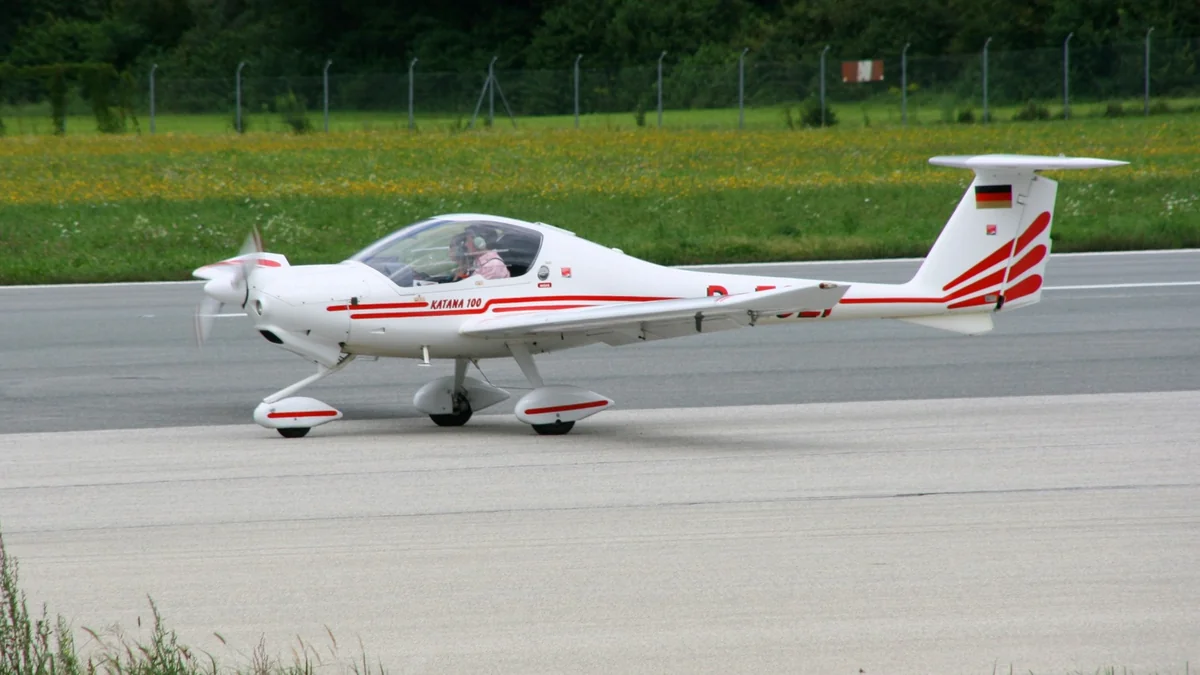
Walk around many European flight schools and you are likely to find at least one of these three on the line for the PPL: a high-wing Cessna 172, a low-wing Diamond DA20 or a two-seat Tecnam P2008. All three fall inside the same single-engine piston (SEP) class rating, so any of them will get you a licence. But they differ in seats, payload, fuel, engine controls and cockpit, and those differences affect your training, what you can do after the licence and what you will need to learn when you move to another aeroplane.
You will still see the older Cessna 150 and 152 at clubs and schools. They are classic two-seat high-wing trainers: FAA type certificate data sheet 3A19 lists the early Model 150 at 1,500 lb maximum weight with a Continental O-200-A of 100 hp and 22.5 US gallons usable, and the Model 152 at 1,670 lb with a Lycoming O-235 (108 or 110 hp) and 24.5 US gallons usable. Many pilots started on them, and plenty still fly at clubs and schools alongside the three types below.
The figures below come from the manufacturers' published specifications and from EASA type-certificate data sheets. Manufacturers measure them in different conditions, so use them to compare broad capabilities, not as planning data. For any real flight, the numbers that count are in the POH or AFM and the mass and balance report of the aircraft you are flying.
The Three Aeroplanes at a Glance
| Cessna 172S Skyhawk | Diamond DA20-C1 | Tecnam P2008JC | |
|---|---|---|---|
| Seats | 4 | 2 | 2 |
| Wing | High | Low | High |
| Engine | Lycoming IO-360-L2A, 180 hp | Continental IO-240-B, 125 hp | Rotax 912 S2, 98.6 hp take-off power |
| Propeller | 2-blade fixed pitch | 2-blade fixed pitch | Fixed pitch |
| Fuel | Avgas 100LL/100 | Avgas 100/100LL | Mogas EN 228 (min. RON 95) or Avgas 100LL |
| Maximum take-off mass | 1,157 kg | 800 kg | 650 kg (630 kg basic) |
| Useful load (published) | 398 kg | 265 kg | 250 kg |
| Usable fuel | 201 l | 91 l | 120 l |
| Max cruise speed (published) | 124 KTAS | 130 KTAS | 116 KTAS at sea level |
| Stall speed, landing configuration | 48 KCAS | 45 KCAS | 44 KCAS |
| Take-off distance over 50 ft obstacle | 497 m | 500 m | 371 m |
Sources: Textron Aviation, Cessna Skyhawk specifications; Diamond Aircraft, DA20 series technical specifications and EASA TCDS EASA.IM.A.223 (DA20-C1 take-off mass 800 kg, usable fuel 91 l for later serial numbers); EASA type-certificate data sheet EASA.A.583 and Tecnam P2008JC brochure.
Cessna 172: The Classic Four-Seater
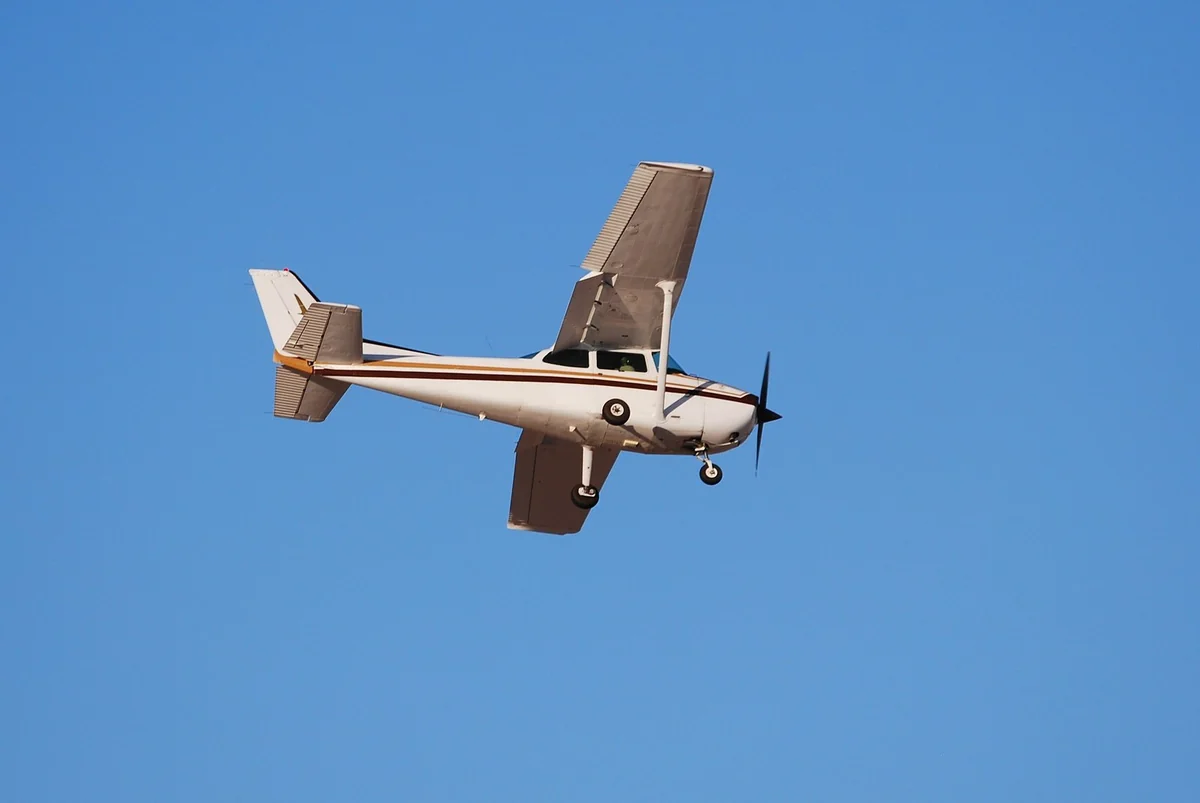
Textron calls the Skyhawk the most popular single-engine aircraft ever built, and its sales pitch is aimed squarely at students: a high wing, a sturdy tricycle undercarriage, two large doors and, in the current model, a Garmin G1000 NXi glass cockpit. Many school 172s are much older, though, with analogue instruments and smaller engines. Our own aeroplane is a Reims-built F172H from 1968, and its panel has little in common with a new Skyhawk's.
What the 172 gives you is room. With 398 kg of useful load and 254 kg of payload with full fuel, according to Cessna, a qualified pilot can take two passengers with full fuel, or three with reduced fuel, provided the mass and balance works out. It is also one of the most common aircraft to rent after the licence, which makes the transition easy. Like the DA20-C1, it has a fixed-pitch propeller and a manual mixture, so you learn engine management the traditional way: leaning, watching temperatures and setting power with one lever and the tachometer. Carburetted older 172s also put carb heat on every checklist (see carb icing on warm days).
Diamond DA20: The Low-Wing Two-Seater
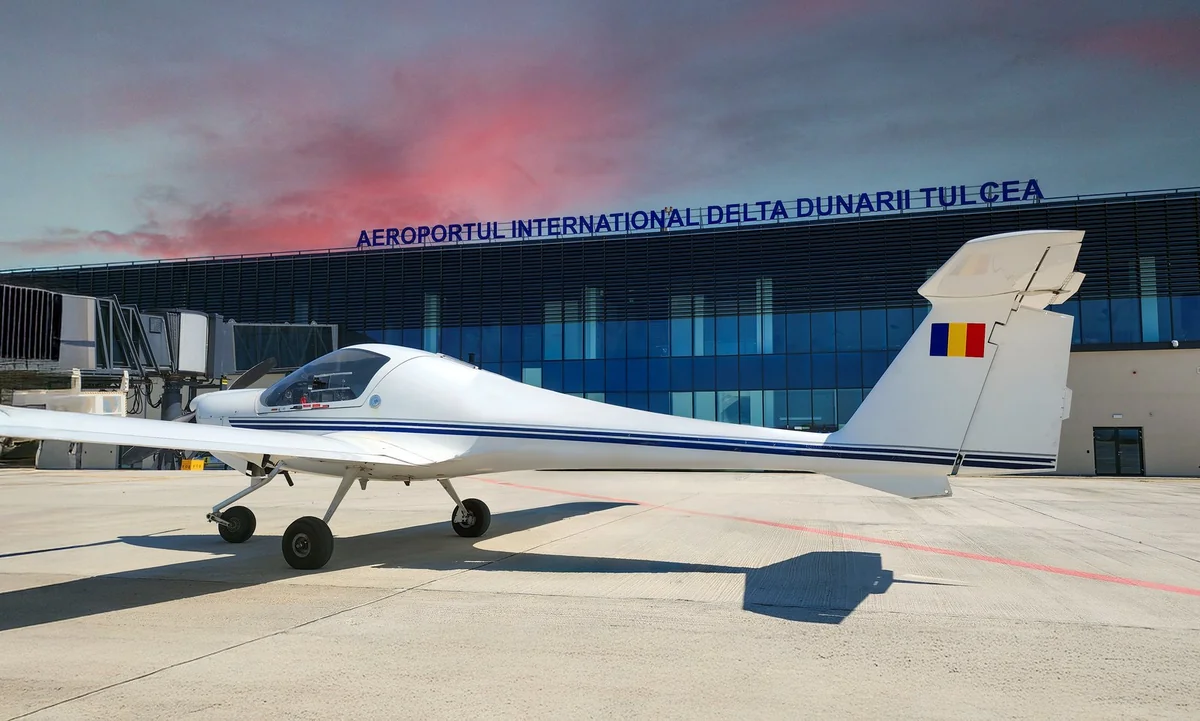
The DA20 is Diamond's two-seat PPL trainer. The current Eclipse, the DA20-C1, is a composite two-seater with a bubble canopy, a Continental IO-240-B of 125 hp and a fixed-pitch propeller. Diamond publishes an 800 kg maximum take-off mass, 265 kg useful load and 91 litres of usable avgas; EASA's type-certificate data sheet confirms the 800 kg take-off / landing mass and the 91-litre usable tank for later serial numbers. Cruise is quoted at 130 KTAS and stall in landing configuration at 45 KCAS.
There is also a Rotax-powered line. The older DA20-A1 Katana and the newer DA20i Katana use Rotax 912-family engines (around 100 hp) that can run on mogas as well as avgas; the DA20i adds a constant-speed propeller. Schools that advertise a "DA20" may mean either the Continental Eclipse or a Rotax Katana, so check which one you will fly before you compare fuel, propeller and cockpit with another type.
For training, the DA20's low wing and bubble canopy give a wide view and a sportier feel, closer to later Diamond types. The trade-off versus the 172 is seats and touring payload: it is a two-seater, so after the licence you will need familiarisation on a four-seater if you want to take more than one passenger.
Tecnam P2008: The Light High-Wing Two-Seater
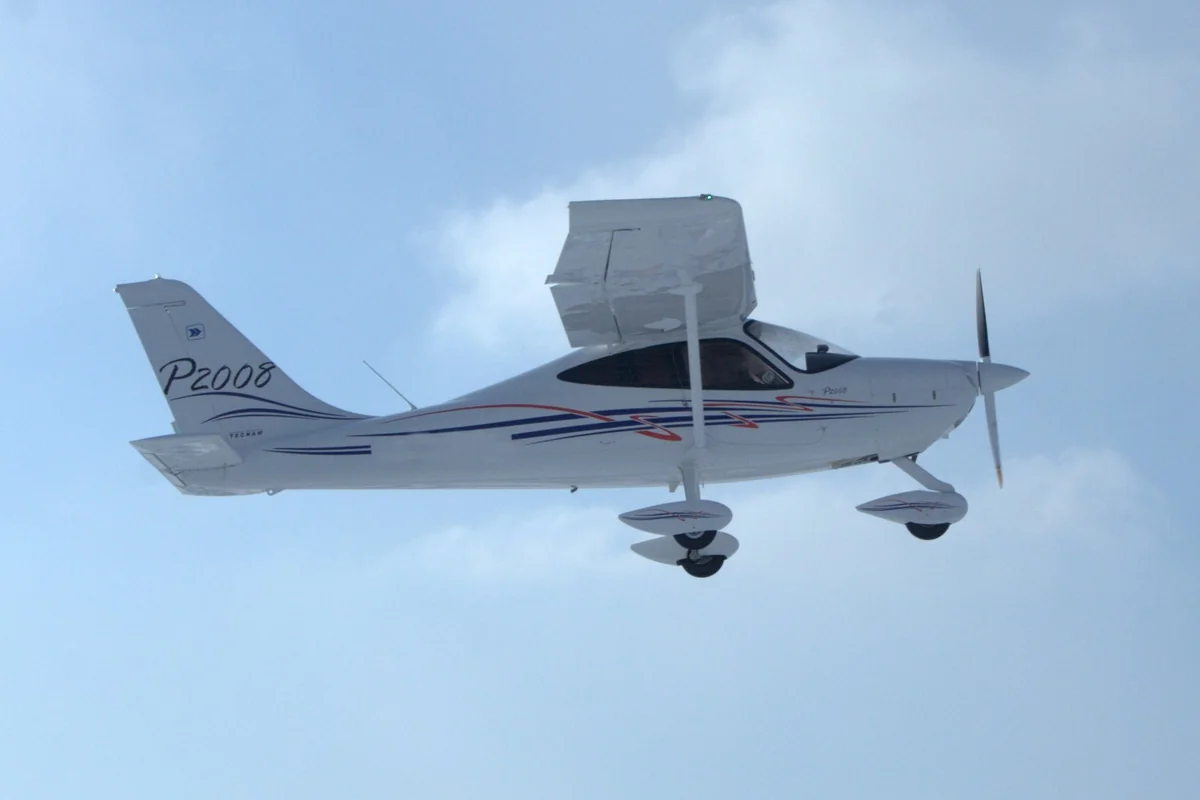
The P2008JC is a two-seat, high-wing aeroplane with a composite fuselage and metal wings. EASA certified it in 2013 under CS-VLA, and its type-certificate data sheet allows a maximum take-off mass of 630 kg, or 650 kg with a factory modification. The Rotax 912 S2 can run on unleaded car fuel (EN 228 with a minimum of RON 95) as well as avgas 100LL, which matters while Europe is moving away from leaded avgas (see our post on Swift 100R and EASA).
The trade-off is payload. Tecnam's brochure gives a standard empty mass of 400 kg and a useful load of 250 kg, with a 20 kg baggage limit. Full tanks, 120 litres usable, weigh roughly 86 kg assuming about 0.72 kg per litre for avgas (mogas is slightly denser). That leaves about 164 kg for two people and their bags, based on the brochure's standard empty mass and the 650 kg MTOM (about 144 kg at the basic 630 kg), so a heavy instructor and a heavy student may have to fly with partial fuel. Use the empty mass of the actual aircraft, not the brochure's.
The type is still being developed: in issue 14 of the data sheet, on 31 March 2026, EASA added the P2008JC NG, certified under CS-23 with a maximum take-off mass of 680 kg.
After the PPL: Where the DA40 Fits
The Diamond DA40 is a four-seat low-wing that is a common next step after the PPL, for touring, glass-cockpit work or differences training rather than as the first aeroplane for the licence. Diamond's DA40 NG, for example, has a turbocharged diesel, a constant-speed propeller and single-lever power control, and burns Jet A-1; the DA40 XLT keeps avgas with a Lycoming and a constant-speed prop. Those features all appear in the differences-training list below. Treat the DA40 as a common next step once you already have the licence and some hours on a simpler SEP, not as the default PPL trainer.
Differences Training: The Hidden Cost of Switching
All three trainers are SEP aircraft, but the class rating is not a free pass between them. Under point FCL.710 of Part-FCL, pilots must complete differences training or familiarisation to fly another variant within a class. AMC1 FCL.710, as summarised by the UK CAA, lists the "complex" features that require differences training within the SEP class: variable-pitch propellers, retractable undercarriage, turbo or supercharged engines, cabin pressurisation, tailwheel, electronic flight information systems (EFIS) and single-lever power control (SLPC).
Norway's civil aviation authority gives a clear example in its guide to SEP familiarisation and differences training: going from a Cessna 172 to a Piper PA-28-161 needs familiarisation, while going from a standard 172 to a variant with a variable-pitch propeller, turbo, EFIS or SLPC needs differences training at an ATO or DTO or with a qualified instructor, entered in your logbook. In practice:
- Learn on a 172, DA20-C1 or P2008 with analogue instruments and you will need differences training before flying a DA40 NG (SLPC, variable pitch, turbo and, usually, a G1000 EFIS), a glass-cockpit 172, or a DA20i with a constant-speed propeller.
- Learn on a glass 172 or a DA20i and you will already have covered EFIS or a constant-speed propeller in that aircraft, but you may still need familiarisation on mixture and fixed-pitch management before you rent an old analogue 172.
- Glass or analogue is a choice too. A G1000 172 and a 1970s 172 belong to the same class but have very different cockpits.
How to Choose
The PPL(A) minimum requirements are the same whichever you pick: under FCL.210.A, at least 45 hours of flight instruction, including 25 hours dual and 10 hours of supervised solo, including at least 5 hours of solo cross-country with one flight of at least 270 km (150 NM) and full-stop landings at two other aerodromes. A few questions help narrow it down:
- What will you fly after the licence? If you plan to take family touring, a four-seat 172 from day one saves a familiarisation later. If you mainly want to fly locally with one passenger, a DA20 or a P2008 does the job with a lighter airframe.
- How much do you and your instructor weigh? Ask the school for the empty mass of its aircraft and do the sums before you sign up, especially for a two-seater. Summer heat makes it worse: performance drops with density altitude. Our Briefing tool helps you check mass and balance and take-off performance against the POH before you go.
- What kind of cockpit will you fly after the licence? Training on the same kind of panel you will use afterwards saves time and money.
- What fuel is available where you will fly? Avgas and mogas are not available everywhere; Jet A-1 matters later if you move onto a diesel DA40.
- Is the fleet reliable and bookable? One aeroplane that is always available often beats a better type that is always in maintenance. Ask how many aircraft the school has and how far ahead students book.
In the end, the aeroplane matters less than the quality of the instruction and how regularly you can fly. A trial lesson in each type the schools near you offer is the best test, and when you are ready for your first trip, our guide to your first cross-country after the PPL picks up from there. For longer routes, the VFR Planner helps sketch fuel stops against your cruise speed and burn.
Sources
- Textron Aviation, Cessna Skyhawk specifications.
- Diamond Aircraft, DA20 series technical specifications (approximate figures for standard-equipped aircraft).
- EASA, Type-certificate data sheet EASA.IM.A.223, DA20-A1 and DA20-C1, issue 06 (5 December 2022).
- EASA, Type-certificate data sheet EASA.A.583, P2008JC and P2008JC NG, issue 14 (31 March 2026).
- Tecnam, P2008JC brochure (2021).
- FAA, Type Certificate Data Sheet No. 3A19 (Cessna 150 and 152), Rev. 50.
- Diamond Aircraft, DA40 series technical specifications (for the post-PPL next-step note).
- EASA, Easy Access Rules for Aircrew (Regulation (EU) No 1178/2011): FCL.210.A, FCL.710 and AMC1 FCL.710.
- UK CAA, Differences training in SEP class rating.
- Luftfartstilsynet (Norwegian CAA), Guide to familiarisation and differences training between SEP variants (July 2021).
This article is general information and does not replace your instructor's advice, the POH or AFM of your aircraft, or the rules of the country where you fly.
Cover: Diamond DV20 Katana at Innsbruck Airport, Austria. Photo by Marek Ślusarczyk (Tupungato), Wikimedia Commons, CC BY 3.0 (cropped).
