
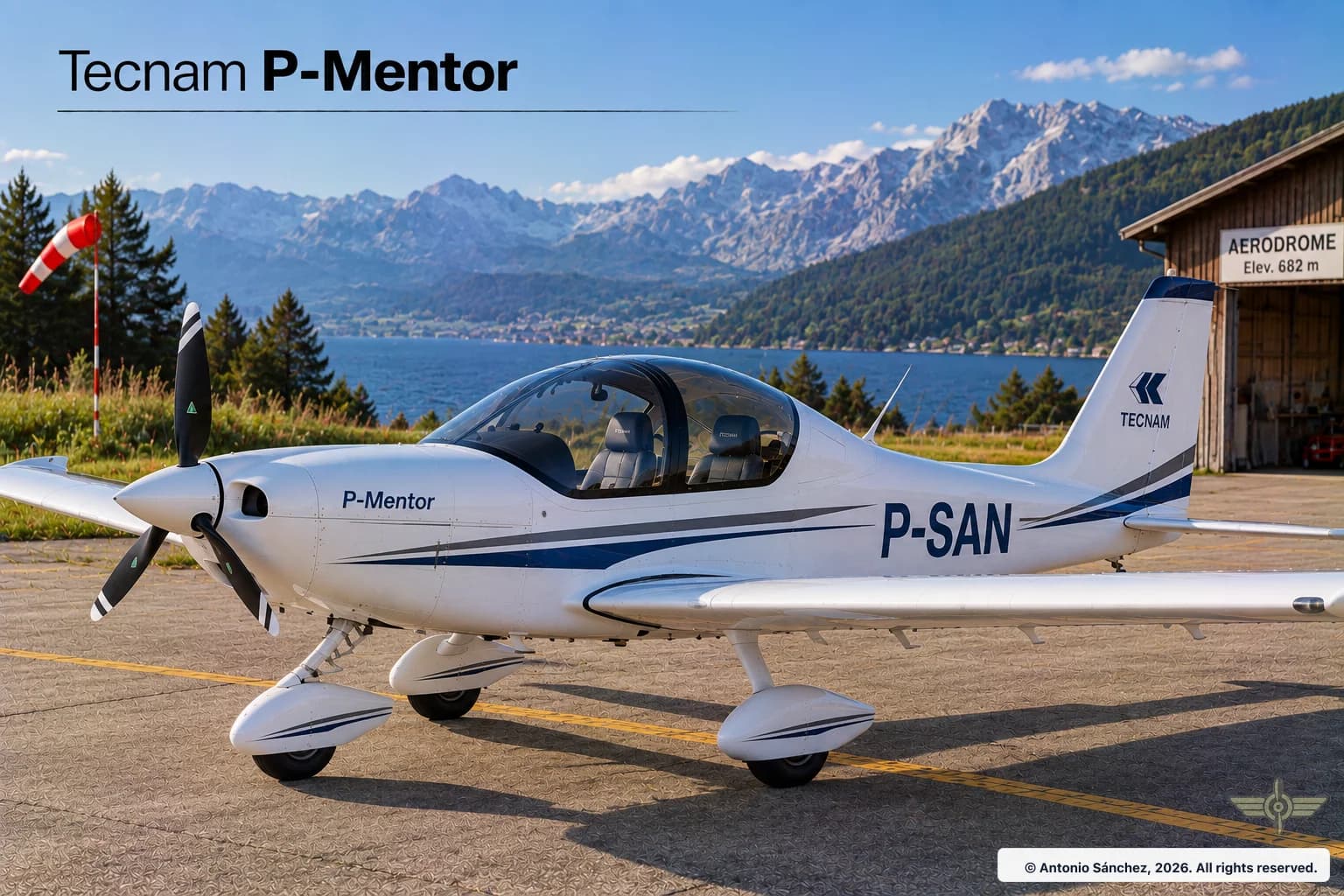
Tecnam P-Mentor Pilot Briefing Guide
As we prepare to brief the Tecnam P-Mentor, it is essential to approach this with a focus on the practical aspects of flying this aircraft, particularly its performance data as outlined in the Pilot Operating Handbook (POH). The P-Mentor is a modern trainer, specifically designed to meet the needs of ab-initio pilots while maintaining low fuel consumption. Given its light weight and modest horsepower, understanding weight and balance (W&B) and runway performance is crucial.
Weight and Balance Pitfalls
One of the first areas to address is weight and balance. The P-Mentor has a maximum take-off weight of 600 kg, which can be easily exceeded if we are not diligent about our calculations. In a typical flying school scenario, students may be accustomed to loading the aircraft with additional baggage or equipment for instructional flights. This can lead to a situation where the aircraft is loaded near its limits, impacting performance.
As instructors, we need to emphasize the importance of accurate loading. A common pitfall is failing to account for student weights accurately, especially when flying with an instructor and a student. Always refer to the W&B table in the POH (PMENTOR) and ensure the load is balanced. Small variations in baggage or fuel can significantly impact the aircraft's performance, especially in terms of climb rates and stall speeds.
For private pilots, W&B calculations may often be more straightforward, but the same principles apply. Verify that all items aboard are documented and accounted for on the W&B sheet, and always conduct a thorough pre-flight check of the aircraft’s loading.
Density Altitude and Hot-Day Take-Off Mindset
Density altitude is another critical consideration when briefing pilots on the P-Mentor. On hot days, the performance can vary drastically compared to standard conditions. The Rotax 912 iSc3 engine produces 100 hp at take-off, but as density altitude increases, engine performance decreases.
Stress the importance of understanding how temperature and pressure affect aircraft performance. For example, at a density altitude above 1,000 feet, the take-off distance can increase significantly. When conducting take-offs on hot days, it is wise to conduct a thorough performance calculation from the POH, especially if the aircraft is loaded near its maximum weight.
Encourage an operational mindset that respects the performance limits of the aircraft. If conditions suggest that the aircraft may struggle to take off safely, it is better to delay or cancel the flight than to risk a compromised performance.
Flap and Power Technique Differences
Another area where students often confuse techniques is in the use of flaps and power settings. The P-Mentor features a simple two-position flap system: 0° and 15°. When briefing, clarify that using 15° flaps can significantly reduce the take-off distance; however, this can also impact the aircraft’s climb performance. Many students may be accustomed to different aircraft with variable flap settings, leading to uncertainty in decision-making.
During take-off, it’s crucial to use full power and maintain a steady climb attitude. Be clear that the P-Mentor's climb performance is more sensitive to power settings than more powerful aircraft, meaning that any reduction in power can lead to a reduction in climb rate.
In terms of landings, remind them that the P-Mentor is more forgiving at 15° flaps but requires careful speed management to avoid excessive sink rates. Reinforcing these techniques will help students become more proficient in their flying.
Take-off and Landing Distance Briefing
Now, let’s discuss take-off and landing distances. The POH provides valuable performance data which should be referenced regularly. Key inputs that matter most include temperature, aircraft weight, and elevation of the airfield.
For take-off, remind students to check the performance charts for the specific conditions of their flight. For instance, at sea level on a standard day, the take-off distance is approximately 200 meters, but this can increase dramatically with higher temperatures or elevations.
For landing, the P-Mentor typically requires a landing distance of around 300 meters on a standard day from a normal approach. Highlight that this distance can vary based on the same factors affecting the take-off. Encourage students to practice calculating these distances as a routine procedure before flight.
Cruise Fuel and Reserve Discipline
Fuel management is paramount, particularly with the P-Mentor's fuel consumption rates. The aircraft runs on MOGAS 95 RON or 100LL, and pilots should always ensure they are aware of the difference in fuel burn rates. The POH provides detailed information on fuel consumption during different phases of flight.
In cruise, the P-Mentor has a fuel burn of approximately 15 liters per hour at a typical cruise setting. Stress the need for maintaining a reserve fuel discipline, particularly for longer flights. A common rule of thumb is to ensure at least a 30-minute reserve upon arrival at destination.
Encourage students to plan their fuel needs meticulously, using the Tecnam P-Mentor briefing calculator to assist them in understanding their fuel requirements based on distance and expected consumption rates.
When to Say No-Go Despite Legal Limits
Finally, it is essential to instill a mindset where safety always takes precedence over legal limits. While the P-Mentor may be legal to fly in certain conditions, there are times when it is prudent to say “no-go.” This could be due to poor weather, high-density altitude, or any other factors that may compromise safety.
Encourage your students to develop a personal minimums checklist that considers their comfort level, experience, and the specific limitations of the P-Mentor. Remind them that as pilots, they are the final authority on the safety of their flight, and they must be prepared to make the tough decision to delay or cancel their flight if conditions are not conducive to safe operations.
Using Pilot Sanchez
- Briefing: Start with a thorough briefing based on the P-Mentor POH and performance data.
- Planner: Use the Planner walkthrough to prepare for the flight.
- Analysis: After the flight, evaluate performance using the Flight analysis guide.
About this model
The Tecnam P-Mentor is designed for modern ab-initio syllabi, focusing on low fuel burn and operational efficiency. Its lightweight structure allows for nimble handling and an engaging flying experience, but it does require careful attention to loading and performance calculations.
The empty weight of the P-Mentor is notably light, which means that even small choices regarding baggage can have a pronounced effect on the W&B sheet. Pilots must always be vigilant about these details to ensure safety and performance during each flight. The P-Mentor is not just a trainer; it embodies the essence of efficient flying, balancing performance with economy, making it an ideal choice for today’s flight training environment.