
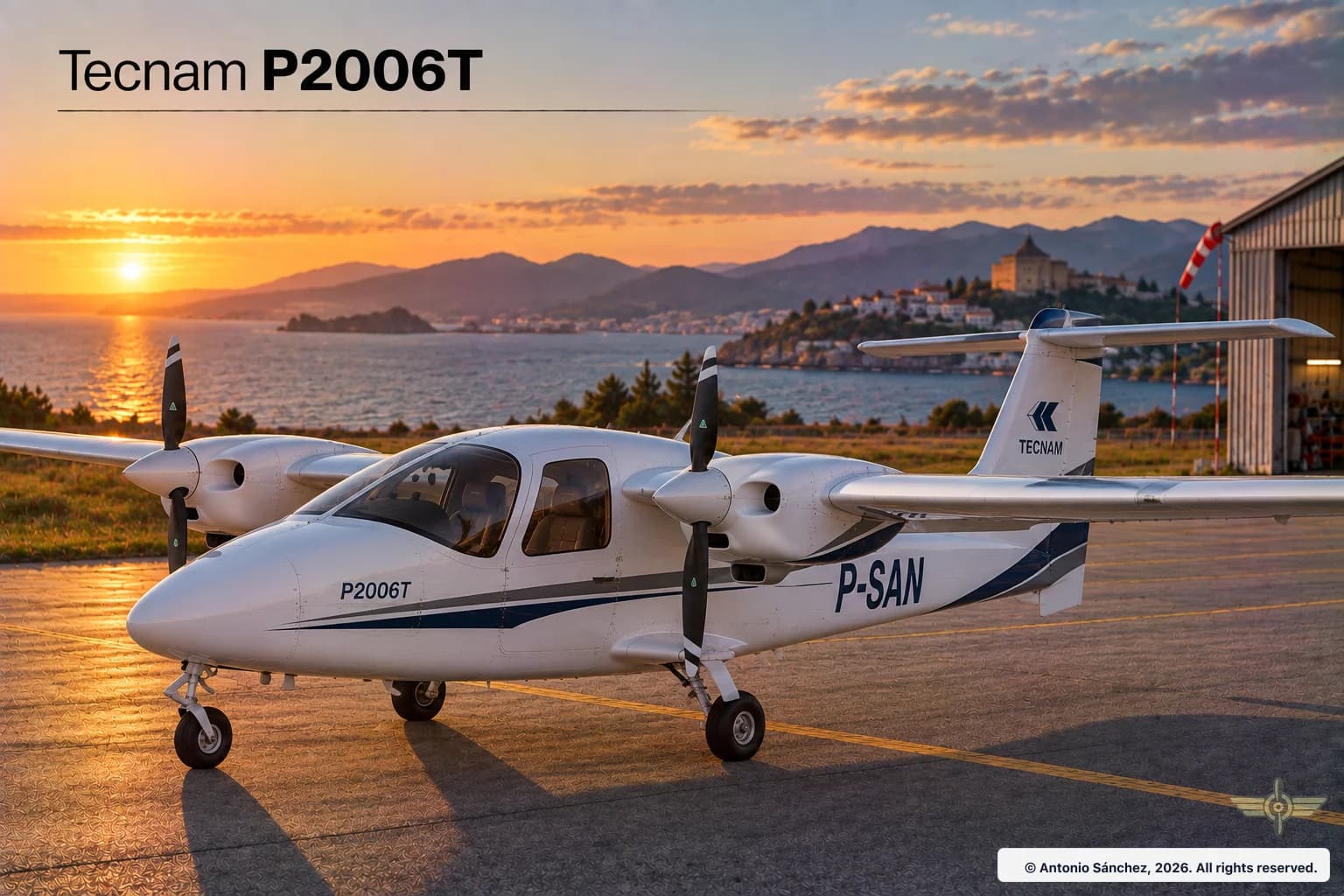
Tecnam P2006T Pilot Briefing Guide
This guide focuses on briefing techniques for the Tecnam P2006T, a light twin aircraft powered by Rotax 912 S3 engines. As a flight instructor, your objective is to ensure pilots understand the unique characteristics and performance data relevant to this aircraft.
Before flight
-
Review the POH: Always start your briefing with the appropriate Pilot Operating Handbook (POH). For the P2006T, refer to the Tecnam P2006T AFM Doc # 2006/044 (Ed.4 Rev.22, 11-Sep-2024). Ensure all pilots are familiar with the layout and key sections.
-
Weight & Balance: Discuss the importance of accurate weight and balance calculations. With typical school loading often differing from private use, remind pilots of the pitfalls:
- Ensure the center of gravity is within limits, especially with varying passenger and baggage loads.
- Emphasize that the P2006T can easily become nose-heavy with improper loading configurations.
-
Density Altitude Awareness: On hot days, remind pilots to consider density altitude’s impact on performance. Discuss how higher density altitude affects engine performance, climb rates, and take-off distances. Encourage pilots to calculate take-off distances based on the most conservative figures in the POH.
-
Engine Operating Techniques: The Rotax 912 S3 engines require specific handling. Discuss the power settings and RPM ranges, ensuring pilots understand that unlike larger twins, the P2006T may require different flap and power techniques during take-off and landing.
At the aircraft
-
Pre-flight Inspection: Conduct a thorough pre-flight inspection, paying special attention to fuel levels and quality (100LL or MOGAS). Verify that fuel is sufficient for planned operations plus reserves.
-
Flap Settings: Brief the correct flap settings for take-off and landing. Students may confuse these with other aircraft types, so be specific about the P2006T’s requirements:
- For take-off, use the recommended flap setting as detailed in the POH.
- For landing, clarify the landing flap configuration and highlight the importance of maintaining a stable approach.
-
Take-off and Landing Distances: Use the POH to outline critical take-off and landing distances. Discuss which inputs matter most:
- Weight
- Flap settings
- Wind conditions
- Density altitude
- Emphasize the need to use the longest distances available, particularly in adverse conditions.
-
Fuel Management: Discuss the fuel consumption rates at various cruise settings. Ensure pilots understand the importance of maintaining discipline in fuel reserves, particularly with two engines. Aiming for a minimum of 30 minutes of fuel reserve is prudent in multi-engine operations.
After numbers
-
No-Go Decisions: Stress the importance of being prepared to say no-go despite legal limits. If calculations indicate marginal performance, encourage pilots to err on the side of caution. Discuss scenarios where engine-out planning becomes critical.
-
Flight Planning Tools: Familiarize pilots with available tools:
- Use the Tecnam P2006T briefing for quick calculations.
- Make use of the How to plan with your plane guide to ensure comprehensive planning.
- Encourage using the Planner walkthrough to streamline the planning process.
- Review the Flight analysis guide post-flight for performance evaluation.
-
Post-Flight Review: After each flight, conduct a debriefing focusing on what went well and areas for improvement. Discuss fuel consumption against the planned figures and any unexpected performance deviations.
Using Pilot Sanchez
- Briefing → Ensure pilots are well-informed on specific aircraft characteristics and performance.
- Planner → Use tools to plan flights effectively, taking into account weight, balance, and environmental factors.
- Analysis → Review flights with data analysis to improve future performance and decision-making.
About this model
The Tecnam P2006T represents a significant shift in the economics of multi-engine training for flight schools. Powered by the Rotax 912 engines, it offers a cost-effective solution for gaining multi-engine experience without the financial burden typically associated with larger twin aircraft. This makes it an attractive option for training environments, where budget constraints are often a concern.
However, the P2006T's unique characteristics require pilots to be vigilant about weight and balance before each sortie. Engine-out drills depend heavily on precise calculations, emphasizing the importance of understanding how loading impacts performance. This reinforces the need for thorough briefings and a disciplined approach to flight preparation.
With careful planning and execution, pilots can fully leverage the capabilities of the P2006T while ensuring safety and efficiency in their operations.