
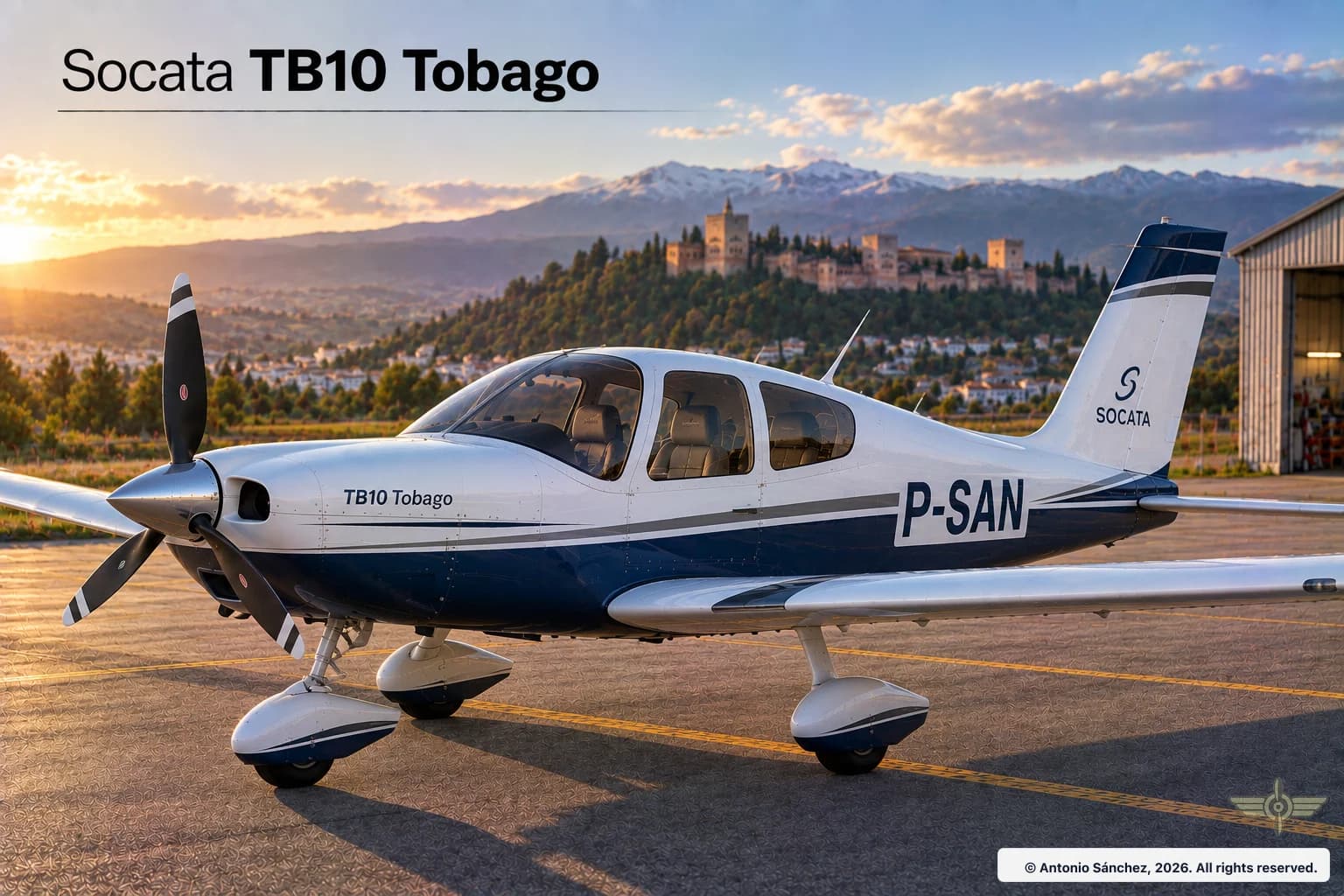
Socata TB10 Tobago Briefing Guide
Step 1: Weight & Balance Considerations
When briefing the TB10, start with weight and balance calculations. Ensure that the aircraft is within the maximum takeoff weight (MTOW) of 1,150 kg (2,535 lbs). This is crucial, especially in a training environment where aircraft may often be loaded differently than in private operations.
-
Understand Loading Differences: In a typical school environment, students might load the aircraft with two or three occupants plus baggage, often exceeding the limits without realizing it. Emphasize that the calculated center of gravity (CG) must fall within the limits specified in the POH.
-
Use the Weight & Balance Chart: Refer to the weight and balance chart in the POH. Tally the weight of each occupant and baggage, and calculate the moment to ensure compliance. This chart is essential for determining the aircraft's handling characteristics.
-
Spot Common Pitfalls: Watch for common mistakes such as underestimating baggage weight or failing to account for full fuel loads. Stress the importance of recalculating after any changes in loading.
Step 2: Density Altitude Awareness
Discuss the effects of density altitude on aircraft performance, particularly on hot days.
-
Hot-Day Takeoff Mindset: Explain that on warm days, the aircraft will require longer takeoff distances. The TB10 has a takeoff distance of approximately 900 meters (2,953 feet) at sea level, but this can increase significantly with higher density altitudes.
-
Performance Charts: Reference the performance charts in the POH for takeoff distances. Students should be encouraged to calculate the expected takeoff distance based on current weather conditions and aircraft weight.
-
Decision-Making: Reinforce the need to be conservative in assessing whether conditions are suitable for takeoff, especially when close to maximum performance limits.
Step 3: Flap and Power Techniques
Clarify flap and power settings, as students often confuse these with other aircraft types.
-
Flap Settings: The TB10 has two flap settings: 0° and 30°. For takeoff, advise using 0° flaps. Emphasize that using flaps inappropriately can lead to unexpected handling characteristics.
-
Power Management: The O-360 engine produces 180 hp at 2700 RPM. Instruct students on the importance of achieving full power before takeoff and maintaining that during climb out.
-
Common Errors: Point out that students might be tempted to apply flaps for landing too early or too late, which can affect their approach. Stress the need for proper timing when deploying flaps, especially in a training environment where distractions are common.
Step 4: Take-off and Landing Distance Briefing
Prepare students for takeoff and landing distances by focusing on critical inputs from the POH.
-
Critical Inputs: The two most important factors affecting takeoff and landing performance are weight and wind conditions. Review the takeoff and landing distance charts in the POH, noting how both weight and wind can significantly alter required distances.
-
Real-World Application: Use local field conditions and runway lengths to create a realistic scenario. If at a shorter runway, students should practice calculating required distances and factoring in wind components.
-
Safety Margins: Encourage students to always add a safety margin to their calculated distances, considering their skill level and potential go-arounds.
Step 5: Fuel Management and Reserve Discipline
Instruct on fuel management to prevent fuel exhaustion during flight.
-
Cruise Fuel Flow: The O-360 typically burns about 12-15 gallons per hour. Use the POH to confirm fuel flow settings at cruise power.
-
Reserve Discipline: Stress the importance of maintaining a proper reserve. For VFR flights, a minimum of 30 minutes of reserve is advisable, and for IFR, 45 minutes. Highlight the need to factor in fuel used for taxiing and holding.
-
Fuel Planning: Utilize the Socata TB10 Tobago briefing tool for accurate fuel calculations during flight planning.
Step 6: Knowing When to Say No-Go
Discuss scenarios where it’s necessary to cancel a flight despite being within legal limits.
-
Assessing Conditions: Encourage students to evaluate not just legal limits but their own comfort levels with the aircraft. This includes weather conditions, aircraft performance, and personal proficiency.
-
Safety Over Compliance: Reinforce that it’s better to err on the side of caution. If the takeoff distance, weight, or weather conditions seem borderline, it's better to postpone the flight.
-
Realistic Scenarios: Share personal experiences where a go/no-go decision was crucial. This will help students understand the importance of self-assessment in aviation safety.
Using Pilot Sanchez
- Use the briefing tools to prepare for flights effectively.
- Plan your flight using resources like How to plan with your plane.
- Analyze your flights post-journey with the Flight analysis guide.
About this model
Pilots of the Socata TB10 Tobago often praise its crisp handling characteristics, which are particularly beneficial for training purposes. The aircraft's distinct wing planform contributes to its stability and responsiveness, making it an ideal choice for both novice and experienced pilots.
French training syllabi frequently emphasize the significance of proper fuel management and flap discipline, especially when operating from semi-prepared strips on hot days. The TB10's performance can be significantly affected by external conditions, and understanding these nuances is key to safe operation. This model has proven itself as a reliable trainer and tourer, with a legacy that spans decades in European aviation schools.