
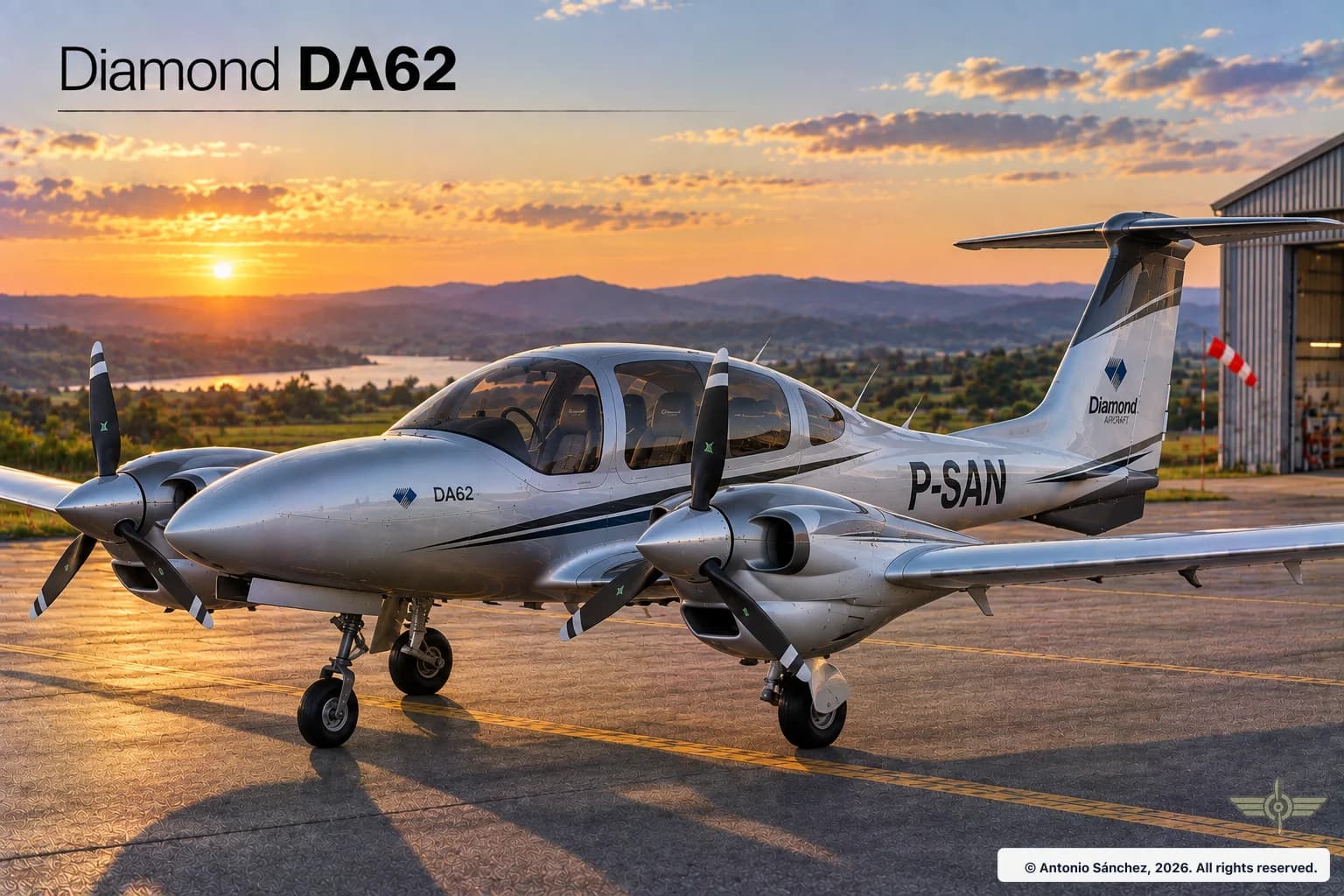
Diamond DA62 Pilot Briefing Guide
What are the weight and balance pitfalls specific to the DA62?
Weight and balance management in the DA62 is critical, particularly when transitioning from single-engine aircraft. Students often misjudge the loading configurations between typical school loads and private use, which can lead to performance issues.
-
Understanding Limits: The DA62 has a maximum take-off weight (MTOW) of 2,100 kg. Make sure to account for pilot and passenger weights accurately, especially with multiple students on board.
-
Fuel Loading: Students may underestimate the impact of fuel load on performance. The DA62 has a total fuel capacity of 1,500 liters, but filling the tanks to the brim for short flights can lead to exceeding weight limits. Always calculate your weight and balance using the specific loading configurations as indicated in the POH.
-
Center of Gravity (CG): The CG envelope is relatively narrow. Ensure that loading is balanced, as this affects handling characteristics during flight. Review the POH for the CG limits and use the provided charts to assess your loading before departure.
How does density altitude affect take-off performance?
Density altitude significantly impacts the DA62's take-off performance, especially on hot days. Pilots must adopt a mindset of adjusting their expectations based on environmental conditions.
-
Performance Calculations: On warm days, the air density decreases, which affects engine performance and lift. Always compute take-off distances using the POH tables, factoring in current density altitude. For example, at a density altitude of 1,500 meters, expect a marked increase in the required take-off distance.
-
Engine Performance: The Austro Engine E4P-C engines perform optimally at lower altitudes. As density altitude increases, consider using maximum continuous power (MCP) to ensure adequate performance during take-off.
-
Decision Making: If conditions indicate a take-off distance that exceeds available runway length, it is prudent to delay the flight or consider an alternate airport.
What flap and power technique differences should students be aware of?
Students transitioning to the DA62 often confuse flap and power settings with those of other aircraft types. Understanding these differences is vital for effective operation.
-
Flap Settings: The DA62 uses a two-position flap system: 0° for take-off and 15° for landing. Unlike some other aircraft that might use multiple positions, students should be reminded that the DA62's performance is optimized with these settings.
-
Power Management: The DA62's engines feature a unique power management system. Students must learn to apply power smoothly, especially during take-off and approach. The recommended technique is to apply full power at take-off and reduce power gradually during descent to maintain efficient fuel flow and engine health.
-
Training Focus: Emphasize the importance of practicing these techniques in a controlled environment to avoid confusion during real flights. Use simulator sessions if possible to build confidence.
How do take-off and landing distances vary, and what inputs matter most?
When briefing take-off and landing distances, it is crucial to highlight which inputs from the POH are most impactful.
-
Take-off Distance: Key factors include weight, flap setting, and density altitude. Always reference the POH charts for specific calculations, and ensure that students are aware of how these elements can dramatically alter required take-off distances.
-
Landing Distance: Similar to take-off, landing distances are influenced by weight, flap settings, and wind conditions. Review the landing distance tables in the POH, and stress the importance of accounting for wind components—headwinds can decrease landing distance, while tailwinds can increase it.
-
Real-World Application: Conduct a brief analysis of typical departure and arrival airports to emphasize the importance of these calculations in real-world scenarios. This adds context and urgency to the training.
What are the best practices for cruise fuel management and reserve discipline?
Effective fuel management is essential for safety and efficiency in the DA62.
-
Fuel Flow Monitoring: The DA62's Austro engines are sensitive to power settings. Always monitor fuel flow during cruise and adjust power settings as necessary to achieve optimal efficiency. The POH provides specific fuel flow figures at various power settings—students should familiarize themselves with these.
-
Reserve Fuel: The DA62 has a recommended reserve fuel level of 30 minutes of flight time at cruise power. Emphasize the importance of maintaining this reserve to ensure safety, especially in cases of unexpected diversions or delays.
-
Planning for Contingencies: Encourage students to plan for unexpected weather changes or air traffic delays. This means calculating fuel needs not just for the intended flight but also for potential diversions.
When should a pilot say no-go despite legal limits?
Legal limits do not always equate to safe limits.
-
Personal Minimums: Encourage students to establish personal minimums that exceed the legal requirements. For instance, if they feel uncomfortable with the weather conditions, it’s better to delay the flight, even if they are within legal limits.
-
Aircraft Performance: If the calculated take-off or landing distances exceed what is available, or if the weight and balance calculations are marginal, advise students to consider alternative options.
-
Situational Awareness: Reinforce the importance of situational awareness. If there are any doubts about fuel, weather, or aircraft performance, it is always better to err on the side of caution and postpone the flight.
Using Pilot Sanchez
- Brief using the Diamond DA62 briefing tool.
- Plan your flight with the Planner walkthrough.
- Analyze your flight using the Flight analysis guide.
About this model
The Diamond DA62 is a sophisticated twin-engine aircraft, and crews transitioning from single-engine models often underestimate how sensitive twin fuel burns are to altitude and power settings. Unlike single-engine aircraft, where fuel consumption is more predictable, the DA62's performance can vary significantly based on these factors.
Moreover, the DA62 is designed for efficiency, and understanding the intricacies of its fuel management is essential for maximizing range and performance. By utilizing the tables and tools provided in the POH, pilots can set realistic expectations for their flights, ensuring both safety and efficiency in a multi-crew environment.