
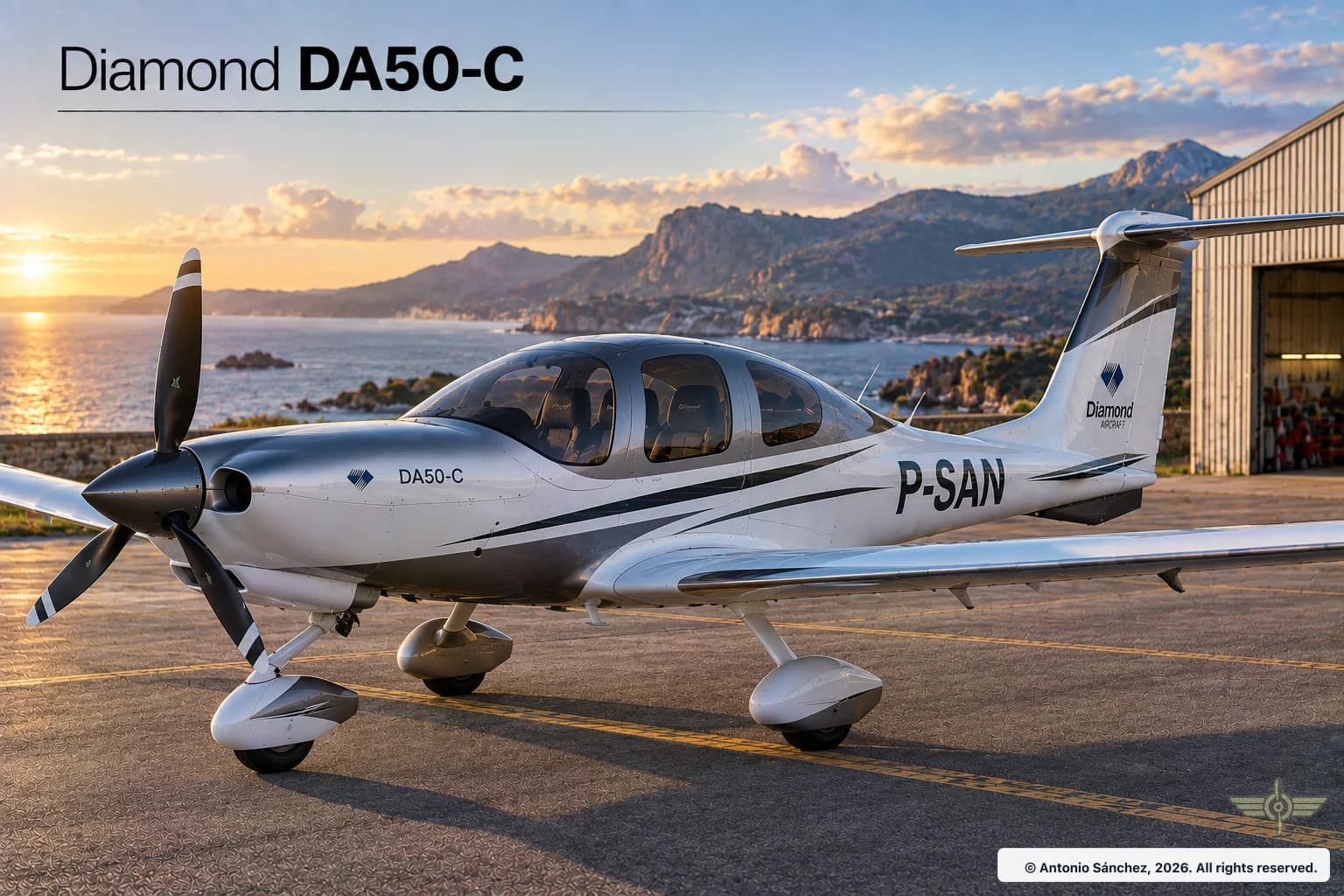
Diamond DA50-C Pilot Briefing Guide
Before flight
- Review the POH: Familiarize yourself with the DA50-C Performance Operating Handbook (POH), especially Doc # 9.01.01-E (Revision 20, 07-Aug-2025). Pay special attention to weight and balance, take-off and landing distances, and fuel requirements.
- Weight & Balance Calculation:
- Ensure you load the aircraft according to the weight and balance limits.
- Remember that the DA50-C is designed for five-seat loading, which can lead to complications. Cross-check the actual weights of passengers, baggage, and fuel against the maximum allowable limits.
- Density Altitude Consideration:
- Assess the density altitude for your departure airport. On hot days, the performance of the DA50-C decreases significantly. Plan for longer take-off and landing distances and ensure you have adequate runway length.
- Flap and Power Settings:
- Understand flap settings (0°, 10°, and 20°) and their effects on take-off and landing. Unlike some other aircraft, the DA50-C requires precise handling of power settings during take-off and landing phases.
- Take-off and Landing Distance Briefing:
- Review the take-off and landing distance charts in the POH. Ensure you are familiar with how weight, altitude, and temperature affect these distances. Use the performance calculator for accurate estimates: Diamond DA50-C briefing.
At the aircraft
- Pre-flight Inspection:
- Conduct a thorough pre-flight inspection, noting any discrepancies or damages to the aircraft's composite structure. Pay particular attention to fuel lines and the engine compartment.
- Fuel Management:
- Ensure that you have sufficient Jet A-1 or Jet A fuel for your flight, including reserves. The DA50-C has specific fuel flow rates that must be adhered to; plan your cruise fuel usage carefully.
- Passenger Briefing:
- Brief passengers on safety protocols, especially regarding egress in case of an emergency. Ensure they understand the aircraft’s layout, including the use of seatbelts and emergency exits.
- Final Weight & Balance Check:
- Re-check your weight and balance calculations with actual figures. If you are at the upper limits, consider the implications for performance and safety.
After numbers
- Take-off Roll and Climb-Out Technique:
- Emphasize the importance of a smooth power application during the take-off roll. Avoid abrupt changes to prevent loss of control. Maintain a climb rate of 1,000 feet per minute under normal conditions.
- Go/No-Go Decision:
- Always prioritize safety over legality. If conditions (weather, aircraft performance, weight) dictate that a flight might compromise safety, do not hesitate to cancel or delay the flight, regardless of whether you meet legal limits.
- Landing Technique:
- During landing, maintain awareness of your approach speed and configuration. Use the 10° flap setting for normal landings to enhance control. Keep in mind the longer landing distances, especially in hot conditions or at high weights.
- Cruise Fuel Discipline:
- Monitor your fuel flow throughout the flight. The CD-300 engine is efficient, but planning for reserves is critical. Ensure you have adequate fuel for your destination plus any alternate, as well as reserves.
Using Pilot Sanchez
- Briefing: Start with a thorough understanding of the DA50-C POH and performance.
- Planner: Use the planning tools to ensure your flight is safe and efficient: How to plan with your plane.
- Analysis: Post-flight analysis is crucial for continuous improvement. Review your performance with the Flight analysis guide.
About this model
The Diamond DA50-C presents a unique blend of personal transport capability and diesel efficiency. With its Continental CD-300 engine delivering 300 hp at take-off and 272 hp for maximum continuous power (MCP), it allows for impressive performance, especially for owner-operators on travel missions. However, this higher performance comes with the responsibility of ensuring that runway and obstacle clearance are meticulously planned, particularly at high gross weights.
When operating the DA50-C, a focus on weight and balance is paramount. The five-seat configuration can lead to challenges, particularly when loading for a typical school environment versus private use. Always double-check your weight calculations and consider the implications of density altitude on your performance figures. The DA50-C is a capable aircraft, but it demands respect for its operational limits.