
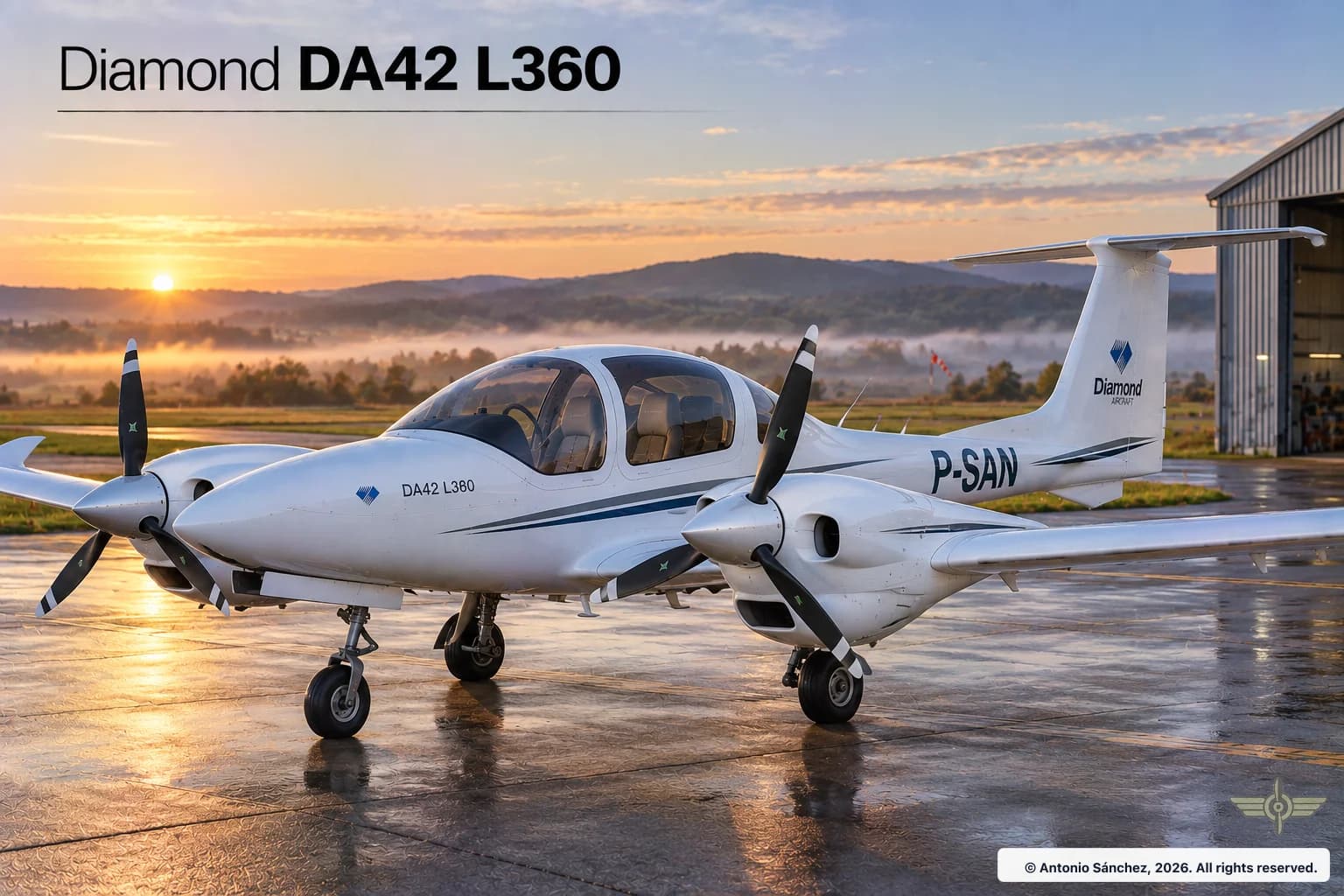
Pilot Briefing for Diamond DA42 L360
The Diamond DA42 L360 is a versatile twin-engine aircraft designed for training purposes, especially in multi-engine operations. This guide aims to provide a structured approach for pilots briefing the DA42, focusing on critical performance and operational aspects derived from the Pilot Operating Handbook (POH).
Step 1: Weight & Balance Considerations
-
Understand the Limits: Begin by referring to the Weight and Balance section in the POH. Ensure that the aircraft is within the maximum gross weight of 3,600 lbs and that the center of gravity (CG) is within limits.
-
Typical Loading Scenarios: Discuss the differences between typical school loads (with instructors and equipment) versus private loading for personal flights. Students often overlook how additional equipment or passengers can shift the CG, which may affect performance during takeoff and landing.
-
Calculate with Precision: Use the weight and balance calculator available at Diamond DA42 L360 briefing to double-check your calculations. This step is crucial for ensuring safe operations, especially in multi-engine scenarios where load distribution affects engine-out performance.
Step 2: Density Altitude Awareness
-
Impact of Density Altitude: Emphasize that high density altitudes can significantly affect aircraft performance. Reference the performance charts in the POH to determine required takeoff distances, and remind students to factor in temperature and pressure altitude.
-
Hot-Day Takeoff Mindset: Encourage a mental checklist for hot-weather operations. A good rule of thumb is to add 10% to the calculated takeoff distance for every 1,000 ft above sea level. Discuss how this mindset helps avoid underestimating the required performance.
Step 3: Flap and Power Techniques
-
Flap Configuration: Clarify the flap settings for takeoff and landing. The DA42 typically uses 0° for takeoff and 30° for landing. Contrast this with other aircraft types students may have flown, as flap settings can vary significantly.
-
Power Management: Discuss the importance of maintaining the appropriate power settings during different phases of flight. The DA42 operates with two Textron Lycoming IO-360 engines, which should be managed carefully to avoid asymmetrical thrust, especially during takeoff and in the event of an engine failure.
Step 4: Takeoff and Landing Distances
-
Key POH Inputs: Highlight the critical factors that affect takeoff and landing distances: weight, wind, runway surface, and slope. Use the POH to demonstrate how these variables interact and emphasize the importance of accurate calculations during the briefing.
-
Balanced-Field Concept: Introduce the balanced-field length concept. Explain that pilots should know the point at which they must make the decision to continue the takeoff or execute an engine-out procedure if an engine fails. This is especially crucial in multi-engine training.
Step 5: Cruise Fuel and Reserve Discipline
-
Fuel Planning: Discuss fuel requirements according to the POH, focusing on the need to calculate fuel for the planned flight, plus reserves. The DA42 burns approximately 13-15 gallons per hour combined at cruise power settings; remind students to account for this in their pre-flight planning.
-
Reserve Fuel Management: Stress the importance of maintaining a fuel reserve beyond legal minimums, particularly in the DA42, where dual-engine operations can consume fuel more rapidly than anticipated. Encourage students to plan for contingencies and not just minimum requirements.
Step 6: Decision-Making and No-Go Situations
-
Legal vs. Practical Limits: Teach students to differentiate between what is legally permissible and what is operationally safe. Just because the aircraft is within limits does not mean it is wise to proceed, especially in marginal conditions such as poor weather or high density altitudes.
-
Developing Judgment: Discuss scenarios where it might be prudent to call a no-go decision, even if all parameters are within limits. Encourage a culture of safety and the importance of trusting one’s instincts.
Using Pilot Sanchez
- Briefing: Utilize this guide to prepare a comprehensive briefing for DA42 operations.
- Planner: Refer to the Planner guide to integrate your briefing into flight planning.
- Analysis: After the flight, assess performance using insights from the Flight analysis guide.
About this model
Twin students often remember their first DA42 checkout vividly. The aircraft's composite design and advanced avionics can be intimidating, but what truly sets it apart is the critical need for weight-and-balance awareness combined with fuel planning. The DA42's performance is highly sensitive to these factors, making them inseparable from effective briefing.
For many, the first experience with the DA42 includes realizing how single-engine climb gradients can severely limit options in a multi-engine environment. This emphasizes the need for thorough pre-flight assessment and understanding of the aircraft's capabilities. With a balanced-field mindset, pilots become adept at recognizing the importance of these performance calculations, ensuring safety and efficiency in their operations.