
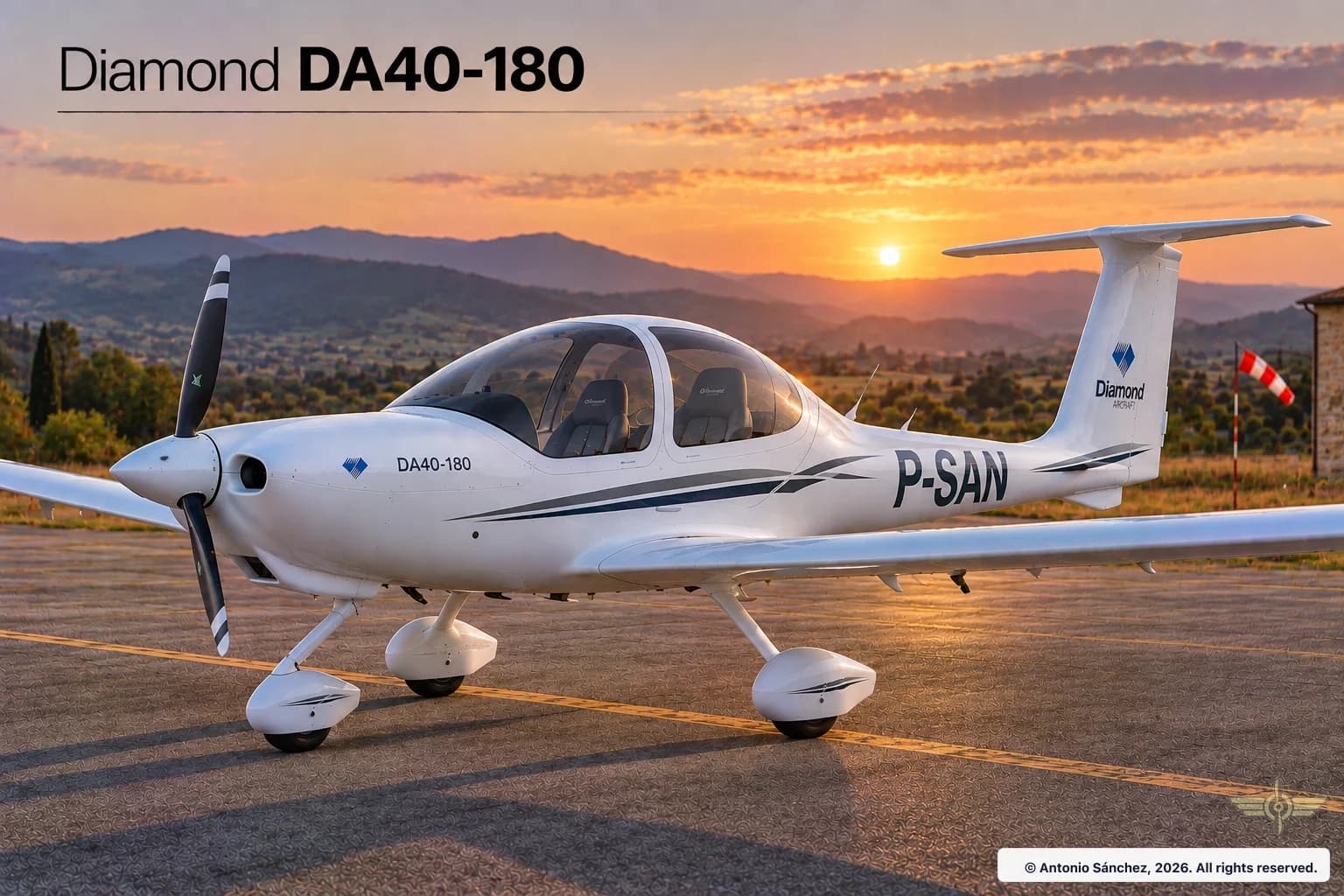
Diamond DA40-180 Pilot Briefing Guide
Scenario
Imagine you’re preparing for a flight in a Diamond DA40-180 from your local airfield on a warm summer day. You’ve got three passengers on board, and you’re planning a scenic tour that will culminate in a landing at a nearby airstrip. As you conduct your pre-flight briefing, you want to ensure your passengers are comfortable and that you operate within the aircraft’s performance limits. This briefing will focus on practical decision-making based on the Pilot Operating Handbook (POH) performance data.
Decision Points
-
Weight & Balance Considerations: The DA40-180 can accommodate four adults comfortably, but it’s crucial to calculate the weight and balance accurately. In a typical flying school scenario, students often load the aircraft with maximum fuel and passengers, which can lead to exceeding the maximum takeoff weight, especially when considering baggage. Always perform a weight and balance calculation using the current POH and ensure that the Center of Gravity (CG) is within limits.
-
Density Altitude Awareness: On hot days, the density altitude can affect performance significantly. The DA40-180's climb performance is reduced as temperature increases. Be mindful of the ambient temperature and calculate your takeoff and climb performance at the forecasted density altitude. Remember, even if the aircraft is legal to fly, performance can degrade quickly in high-density altitude scenarios.
-
Flap and Power Techniques: Students often confuse flap operations with those of other aircraft. The DA40-180 typically requires full flaps for short-field takeoffs, but understanding the context of your flight is key. Explain the difference between using flaps for takeoff and landing, and how power settings affect performance during these phases.
-
Take-off and Landing Distance: Review the POH data for take-off and landing distances. Key inputs include weight, altitude, temperature, and wind conditions. For example, at maximum gross weight and high-density altitude, the takeoff distance can significantly increase. Ensure you discuss the importance of using the correct take-off distance tables from the POH and emphasize that they are based on standard atmospheric conditions.
-
Cruise Fuel and Reserve Discipline: During your flight planning, remind yourself and the passengers about fuel management. The DA40-180 holds 50 litres of usable fuel, and it’s prudent to calculate your fuel consumption at cruise. Always plan for a reserve, typically 30 minutes of fuel at cruise settings, to account for unexpected changes in your flight plan.
-
Decision to Go or No-Go: Stress the importance of the pilot’s authority to make the final go/no-go decision. If the calculated performance indicates marginal conditions or if you feel uncomfortable with the aircraft loading or weather, it is essential to prioritize safety and consider postponing the flight, regardless of whether it is within legal limits.
POH Workflow
-
Access the POH: Use the latest version of the Diamond DA40-180 AFM Doc # 6.01.01-E (Revision 10, 18-Sep-2023) to ensure you are referencing the correct performance data. This is critical as performance tables can vary based on the serial number of the aircraft.
-
Calculate Weight and Balance: Before flight, use the weight and balance calculator available here to ensure your load is compliant. Input passenger weights, baggage, and fuel to confirm that you are within limits.
-
Determine Performance Data: After confirming weight and balance, refer to the POH to calculate take-off and landing distances based on your current conditions. Pay attention to the temperature and pressure altitude, as these will impact your take-off and landing performance.
-
Plan Fuel Requirements: Review the POH fuel consumption rates during your planned cruise altitude. Use this data to confirm that you have sufficient fuel for your journey, including reserves.
-
Review Emergency Procedures: Familiarize yourself with the emergency procedures outlined in the POH. This will ensure you are prepared for any unexpected situations during the flight.
-
Post-Flight Analysis: After your flight, use the Flight analysis guide to evaluate the flight performance and fuel consumption. This will help you improve your pre-flight planning for future flights.
Using Pilot Sanchez
- Review the briefing to understand operational limits.
- Use the planner to prepare for your flight.
- Analyze your flight post-landing for continuous improvement.
About this model
The Diamond DA40-180 is a versatile aircraft often found in both steam-gauge and G1000-equipped fleets. This duality can lead to confusion if the POH supplement applicable to your specific aircraft is not verified. Always confirm which POH version applies to your serial number before making performance calculations.
The DA40-180 is a robust four-seat composite touring aircraft, ideal for both VFR and IFR training scenarios. Its Lycoming IO-360-M1A engine provides 180 hp, making it capable of impressive climb rates, provided you stay within weight limits and consider environmental factors. As an instructor, it’s vital to instill an understanding of these nuances in your students, ensuring they develop a comprehensive appreciation for the operational characteristics of the DA40-180.