
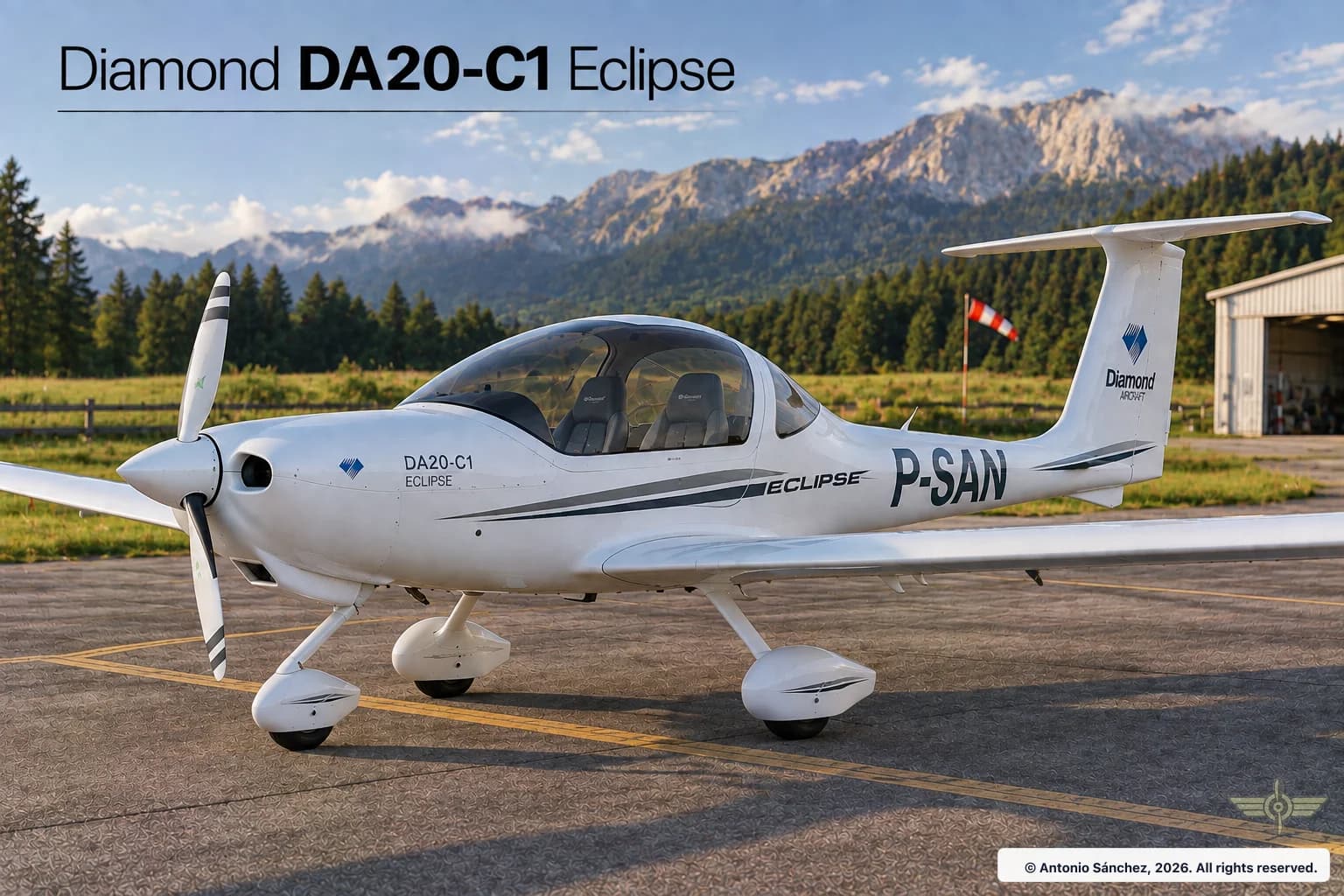
Diamond DA20-C1 Eclipse Briefing Guide
What are the key weight and balance considerations for the DA20-C1 Eclipse?
The Diamond DA20-C1 Eclipse, being a two-seat composite aircraft, has specific weight and balance (W&B) sensitivities that are crucial for safe operation. The most common pitfall for flight schools is the loading scenario, where student pilots often underestimate the impact of baggage and personal items.
When conducting a W&B calculation, always ensure that the total weight does not exceed the maximum allowable gross weight, which is typically around 1,650 lbs for this model. Additionally, pay careful attention to the center of gravity (CG) limits. For training purposes, you'll often find that students load the aircraft with insufficient regard for CG implications, especially if they're accustomed to flying heavier aircraft. The DA20-C1 has a narrow CG range, and improper loading can lead to adverse handling characteristics.
In a typical flight school environment, the aircraft may be loaded with two students, their flight bags, and potentially some additional equipment. In contrast, private users might load the aircraft differently, perhaps with less gear but more emphasis on personal items. Always consult the Weight and Balance section of the POH for the specific loading limits and perform a thorough calculation before every flight.
How does density altitude affect take-off performance in the DA20-C1?
Density altitude plays a pivotal role in the performance of the DA20-C1 Eclipse, particularly on hot days. The aircraft's performance decreases as density altitude increases, which could lead to longer take-off distances and reduced climb rates.
When briefing students, emphasize the importance of calculating the density altitude prior to flight. Use the pressure altitude and temperature to determine the density altitude, and compare it to the aircraft’s performance charts in the POH. On a hot day, even if the aircraft is within weight limits, it may not perform as expected.
Encourage students to adopt a conservative mindset: if the calculated density altitude is high, they should plan for longer take-off distances, and potentially reconsider their take-off weight or destination. Always reference the Take-off Performance table in the POH for accurate distance calculations based on current conditions.
What flap and power settings should students remember?
One common confusion among students transitioning to the DA20-C1 Eclipse is the use of flaps and power settings during take-off and landing. The DA20-C1 typically uses a maximum flap extension of 40 degrees, which is different from many other trainers that may allow for more gradual configurations.
During take-off, it’s generally advisable to use 0 degrees of flaps for maximum performance, particularly on short runways or high-density altitude days. Students often confuse this with other aircraft where a take-off flap setting is standard.
For landings, on the other hand, the use of full flaps (40 degrees) is recommended as it allows for a steeper descent angle and slower approach speed, which aids in landing accuracy. Ensure that students practice the proper flap configurations consistently, as this can significantly affect their confidence and performance during critical phases of flight.
How do take-off and landing distances factor into flight planning?
Take-off and landing distances are crucial considerations and should always be discussed in detail during the pre-flight briefing. The DA20-C1’s take-off distance can vary significantly based on weight, density altitude, and wind conditions.
In the POH, refer to the Take-off Performance section to find the distance required for take-off based on current conditions. Students should be reminded that the most critical inputs for calculating take-off distance are aircraft weight, density altitude, and wind direction/speed. For landing, similarly, consult the Landing Performance table.
It’s essential to have a solid understanding of these distances, especially when operating from shorter runways. Always add a margin to the calculated distances to account for unexpected variables such as wind changes or mechanical issues.
How should pilots manage fuel and reserves?
Fuel management is critical in the DA20-C1, especially considering its Continental IO-240-B engine. The aircraft has a fuel capacity of approximately 24 gallons, with 22 gallons usable. Pilots must maintain discipline in fuel planning, particularly on cross-country flights.
Always refer to the Fuel Consumption section in the POH to understand the expected fuel burn rates during various phases of flight. For cruising, the typical fuel burn is around 5.5 gallons per hour, but this can vary based on power settings and weight.
In addition, students should always calculate their reserves based on the regulations, but it is prudent to aim for more than the minimums. A common practice is to plan for a minimum of 30 minutes of fuel reserve upon reaching the destination. Emphasize that running low on fuel can lead to stressful situations and poor decision-making.
When should a pilot consider a no-go decision despite legal limits?
Legal limits often indicate what is permissible, but safety should always be a pilot's priority. The DA20-C1 Eclipse is a capable aircraft, but there are scenarios where a no-go decision is warranted, even if the aircraft is within legal limits.
For instance, if the calculated take-off distance approaches the runway length, or if the density altitude is higher than anticipated, it may be wise to reconsider the flight. Additionally, if the aircraft is loaded near the maximum gross weight with minimal fuel reserves, the risks increase significantly.
Encourage students to trust their instincts and prioritize safety over compliance with legal limits. If the conditions do not feel right, or if they have any doubts about the aircraft’s performance, it is better to delay or cancel the flight.
Using Pilot Sanchez
- Use the briefing calculator to prepare for your flight: Diamond DA20-C1 Eclipse briefing.
- Plan your flight effectively with the guide: How to plan with your plane.
- Analyze your flight data post-flight: Flight analysis guide.
About this model
The Diamond DA20-C1 Eclipse has become a staple in flight training due to its efficient design and reliable performance. Its lightweight composite structure and the responsive Continental IO-240-B engine make it an ideal platform for ab-initio pilots, preparing them for more complex aircraft down the line.
One of the key aspects of flying the DA20-C1 is the careful fuel management it necessitates, particularly during cross-country solos. The IO-240 engine rewards pilots who plan their fuel meticulously, ensuring they maintain tight reserves to avoid any in-flight surprises. This focus on precision and planning has contributed to the DA20-C1's reputation as a dependable trainer, capable of instilling good habits in future aviators.