
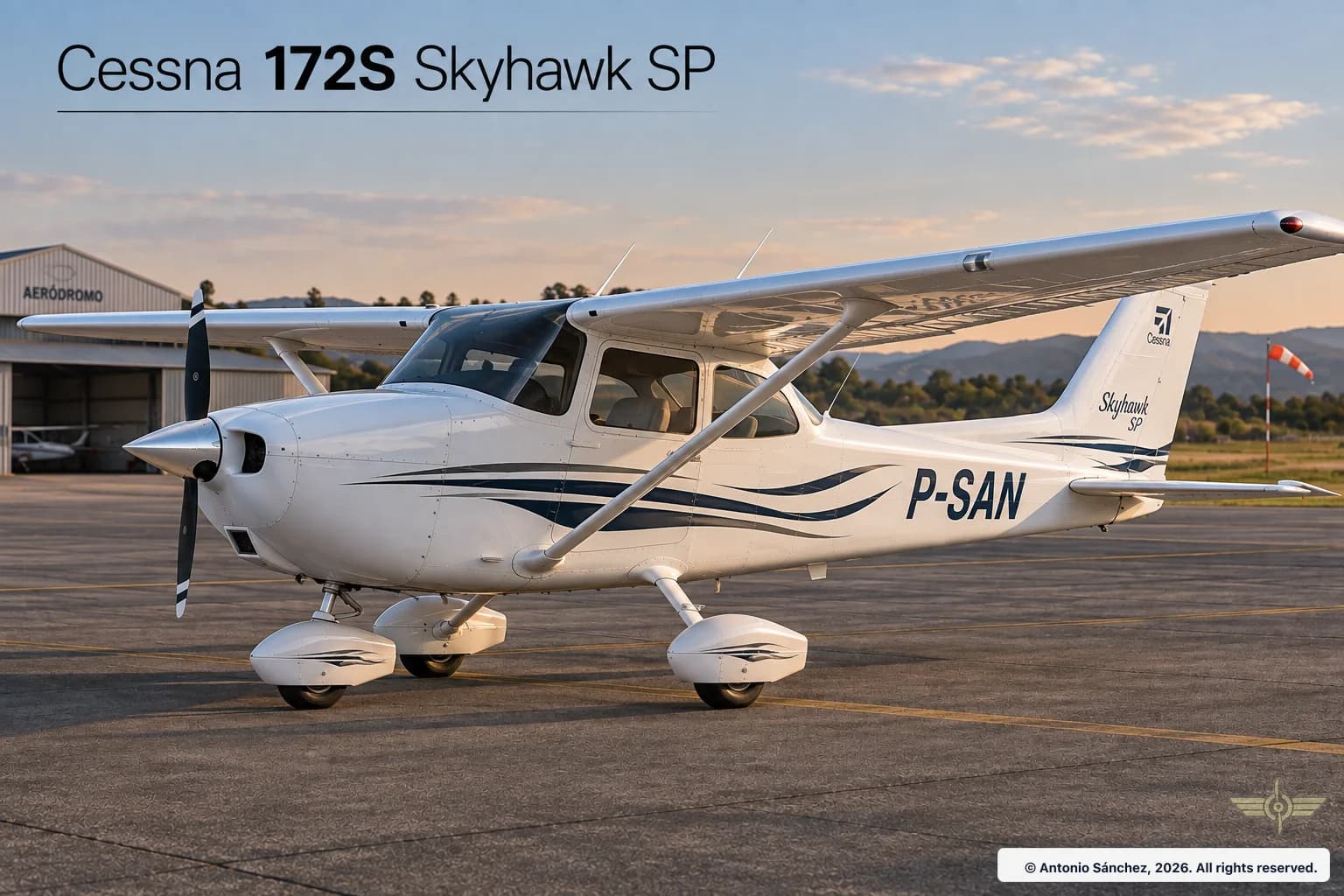
Cessna 172S Skyhawk SP Pilot Briefing Guide
Imagine you’re preparing for a training flight in a Cessna 172S Skyhawk SP with a student pilot. The weather is warm, and the airport is busy. As you gather in the briefing room, you need to ensure your student understands not only the aircraft’s performance but also how to operate it safely under various conditions. This guide will assist you in delivering a comprehensive briefing, focusing on the unique characteristics of the 172S, using the Pilot Operating Handbook (POH) as a reference.
Decision Points
Before the flight, several decision points must be identified and understood. These include weight and balance considerations, density altitude effects, flap and power settings, take-off and landing distances, and fuel management. Each of these factors is critical for safe and efficient operation of the aircraft.
-
Weight & Balance Pitfalls: The Cessna 172S has a maximum take-off weight of 2,550 lbs. While this is straightforward, private users often load their aircraft differently than flight schools. School loads may include extra equipment or instructors, while private loads might be focused on maximizing passenger capacity. Ensure that students are using the weight and balance calculator accurately, factoring in all items on board, including baggage.
-
Density Altitude Considerations: On hot days, density altitude can significantly impact performance. Explain how warmer air reduces engine efficiency and aerodynamic lift. Use the POH to discuss how to calculate density altitude, and remind students to adjust their take-off distances accordingly. A simple rule: if it's hot, give yourself more runway.
-
Flap and Power Techniques: Students sometimes confuse flap settings and power management with other aircraft types. The C172S has a unique flap setting of 10°, 20°, and 30°. Ensure they understand the appropriate use of flaps during take-off and landing, emphasizing the need for a gradual power application to avoid abrupt changes in pitch.
-
Take-off and Landing Distances: Refer to the POH for specific take-off and landing distances. Factors affecting these distances include weight, wind conditions, and runway surface. Highlight the need to use the POH chart for take-off distance based on weight and density altitude. Students must also understand that landing distances can be longer than anticipated, especially under high-density altitude conditions.
-
Cruise Fuel and Reserve Discipline: The C172S consumes approximately 10-12 gallons per hour during cruise. Stress the importance of calculating fuel reserves before departure, aiming for at least 30 minutes of fuel remaining upon landing, or as specified in the POH. Discuss how to cross-check fuel levels against the calculated consumption during flight.
-
Saying No-Go Despite Legal Limits: Emphasize the importance of safety over legality. Just because the aircraft is within legal limits does not mean it is safe to fly. If the calculated performance metrics indicate that conditions are marginal, it is acceptable to postpone the flight.
POH Workflow
Utilizing the Cessna 172S POH effectively is critical for ensuring safety and compliance. Here’s how to incorporate it into your briefing:
-
Pre-Flight Planning: Start by reviewing the POH section for weight and balance, ensuring the student understands how to calculate their loading configuration. Use the tables in the POH to find the maximum allowable weights and balance limits.
-
Performance Calculations: Discuss how to derive performance data from the POH, particularly for take-off and landing distances. Use scenarios to illustrate how weight and temperature impact performance. For instance, if the aircraft is loaded to 2,500 lbs on a hot day, calculate the expected take-off distance together.
-
Weather Conditions: Encourage students to always check the weather reports and cross-reference with the POH data regarding performance degradation at higher density altitudes. Use a real-world example to illustrate how weather can affect their calculations.
-
Fuel Management: Teach students to use the fuel consumption charts in the POH. They should be able to calculate their required fuel load based on estimated flight time and reserve requirements, checking that their planned route fits within the aircraft's fuel range.
-
Emergency Procedures: Finally, go through the emergency sections of the POH. Students should be familiar with how to handle common in-flight emergencies specific to the C172S, such as engine failure or electrical issues.
Using Pilot Sanchez
- Use the Cessna 172S Skyhawk SP briefing calculator to prepare accurate performance data for your flight.
- Utilize the How to plan with your plane hub guide for comprehensive flight planning tips.
- After the flight, analyze performance with the Flight analysis guide to reinforce learning points.
About this model
The Cessna 172S Skyhawk SP, equipped with the Lycoming IO-360-L2A engine, is a stalwart in the general aviation training environment. Its fuel-injected system provides a reliable powerplant, reducing the chances of carburetor icing, which is a common concern in other models. This feature, combined with its higher gross weight capability, makes it a preferred choice for flight schools and private owners alike.
Instructors often teach students to cross-check G1000 fuel pages against manual weight and balance worksheets. This practice not only reinforces the importance of manual calculations but also fosters a deeper understanding of the aircraft's operational limits. The glass cockpit provides a wealth of information, but reliance on it without understanding the underlying principles can lead to complacency. Thus, the combination of technology and traditional methods creates a well-rounded training experience that prepares pilots for real-world flying.