
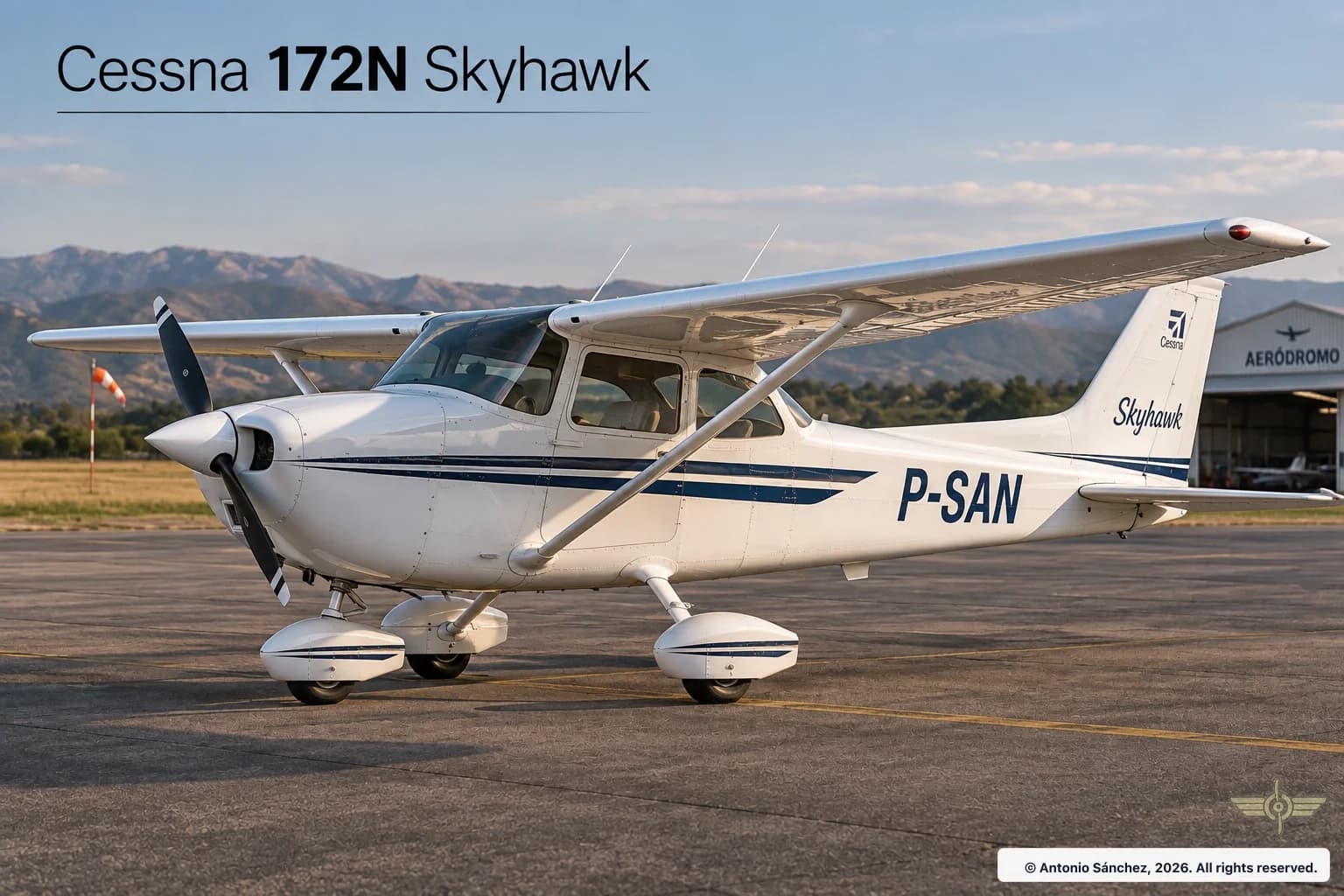
Cessna 172N Skyhawk Pilot Briefing Guide
What are the common weight and balance pitfalls for the Cessna 172N?
When briefing students on weight and balance for the Cessna 172N, it’s crucial to highlight the typical loading scenarios. Flight schools often have multiple students and instructors using the aircraft, which can lead to inconsistent loading practices. Private pilots, on the other hand, might load the aircraft based on personal preferences or a lack of experience with proper weight distribution.
The 172N has a maximum gross weight of 2,400 lbs, but this can quickly be reached with a full fuel load of 40 gallons (240 lbs) and two average-sized adults. Always ensure that the loading is within limits, and remind students to consult the weight and balance charts in the POH. Emphasize the importance of keeping the center of gravity (CG) within the specified range for safe flight characteristics. A common pitfall is neglecting the effect of baggage placement on the CG; students should be aware that heavy baggage in the rear can push the CG outside the safe limits.
How does density altitude affect take-off performance?
Density altitude is a critical factor that can dramatically impact the take-off performance of the Cessna 172N, especially on hot days. In conditions of high density altitude—due to temperature, altitude, or humidity—the aircraft requires a longer take-off distance, and climb performance can be significantly reduced.
Make it a habit for students to check the density altitude before every flight. If conditions suggest a high density altitude, they should be reminded to adjust their take-off technique accordingly. This may involve using full power, ensuring the aircraft is clean (flaps up), and possibly waiting for cooler parts of the day to conduct take-offs. Encourage them to mentally plan for a longer take-off roll and assess the runway length and surrounding terrain before committing to the flight.
What flap and power technique differences do students often confuse?
Students transitioning to the Cessna 172N from other aircraft may confuse flap and power settings. The 172N POH specifies different flap configurations for take-off and landing that are essential for optimal performance. For take-off, the recommended flap setting is zero degrees. However, some students may mistakenly use flaps, thinking it will enhance their short-field performance.
During the landing phase, the standard flap configuration is full flaps (40 degrees), which allows for a steeper descent and slower landing speed. Stress to students that using the correct flap settings is not just a procedural detail; it directly impacts aircraft performance and safety. Remind them that while other aircraft might have different flap settings, the 172N’s performance data is specific to its design and should always be adhered to.
How should we brief take-off and landing distances?
When briefing take-off and landing distances, focus on the critical inputs from the POH that affect these calculations. For the Cessna 172N, the key factors include weight, wind conditions, and runway conditions (dry, wet, or contaminated).
Students should be familiar with the take-off distance charts in the POH. For instance, at maximum gross weight on a standard day, the take-off distance over a 50-foot obstacle is approximately 1,600 feet. However, this distance increases significantly as density altitude rises or with a headwind.
For landing, the landing distance over a 50-foot obstacle is about 1,500 feet on a standard day. Again, factors like weight and runway slope can influence this. Encourage students to calculate these distances before every flight, considering the performance charts in the POH, and to always use them as a basis for their pre-flight planning.
What are the best practices for cruise fuel and reserve discipline?
Fuel management is crucial in the Cessna 172N. The aircraft has a total fuel capacity of 40 gallons, with 36 gallons usable. In practice, students should calculate their fuel consumption and reserves before each flight. The Cessna 172N burns approximately 10-12 gallons per hour at cruise power settings, depending on conditions and configuration.
Stress the importance of calculating the fuel required for the intended flight, including a reserve of at least 30 minutes for VFR flights. This discipline ensures that students are not flying with minimal fuel, which can lead to dangerous situations. Encourage them to incorporate fuel planning as part of their flight briefing, using the POH to determine their fuel flow rates under various conditions.
When should a pilot say no-go despite legal limits?
Legal limits can sometimes mislead pilots into believing a flight is safe when it is not. In the Cessna 172N, even if weight and balance calculations are within legal limits, pilots should evaluate other factors that may warrant a no-go decision. Weather conditions, aircraft performance, and personal comfort levels should always be considered.
For example, if the density altitude is high, and the aircraft is loaded near its maximum gross weight, it may be legally permissible to fly, but the performance may be inadequate for safe operation. Encourage students to adopt a mindset where they assess the overall situation holistically rather than just checking boxes against legal limits. If anything feels off or if they are uncertain, it is always better to postpone the flight.
Using Pilot Sanchez
- Brief the flight using the POH data to ensure understanding of aircraft performance.
- Plan your flight with the Cessna 172N Skyhawk briefing.
- Analyze your flight performance using the flight analysis guide.
About this model
The Cessna 172N Skyhawk, produced from 1977 to 1980, introduced several refinements to the 172 line that remain popular among pilots today. One of the most debated topics at fly-ins is the flap technique for short-field landings. The standard operating procedure (SOP) at many flight schools may differ from the POH recommendations, leading to discussions about the best practices for flap deployment.
The flap settings for take-off and landing can significantly affect performance, and students often need to be reminded to adhere to the POH guidelines. By understanding the nuances of the N-model, pilots can better appreciate its unique performance characteristics and develop the discipline necessary for safe flying. The 172N remains a cornerstone of flight training, and mastering its specific operational parameters is essential for all who fly it.