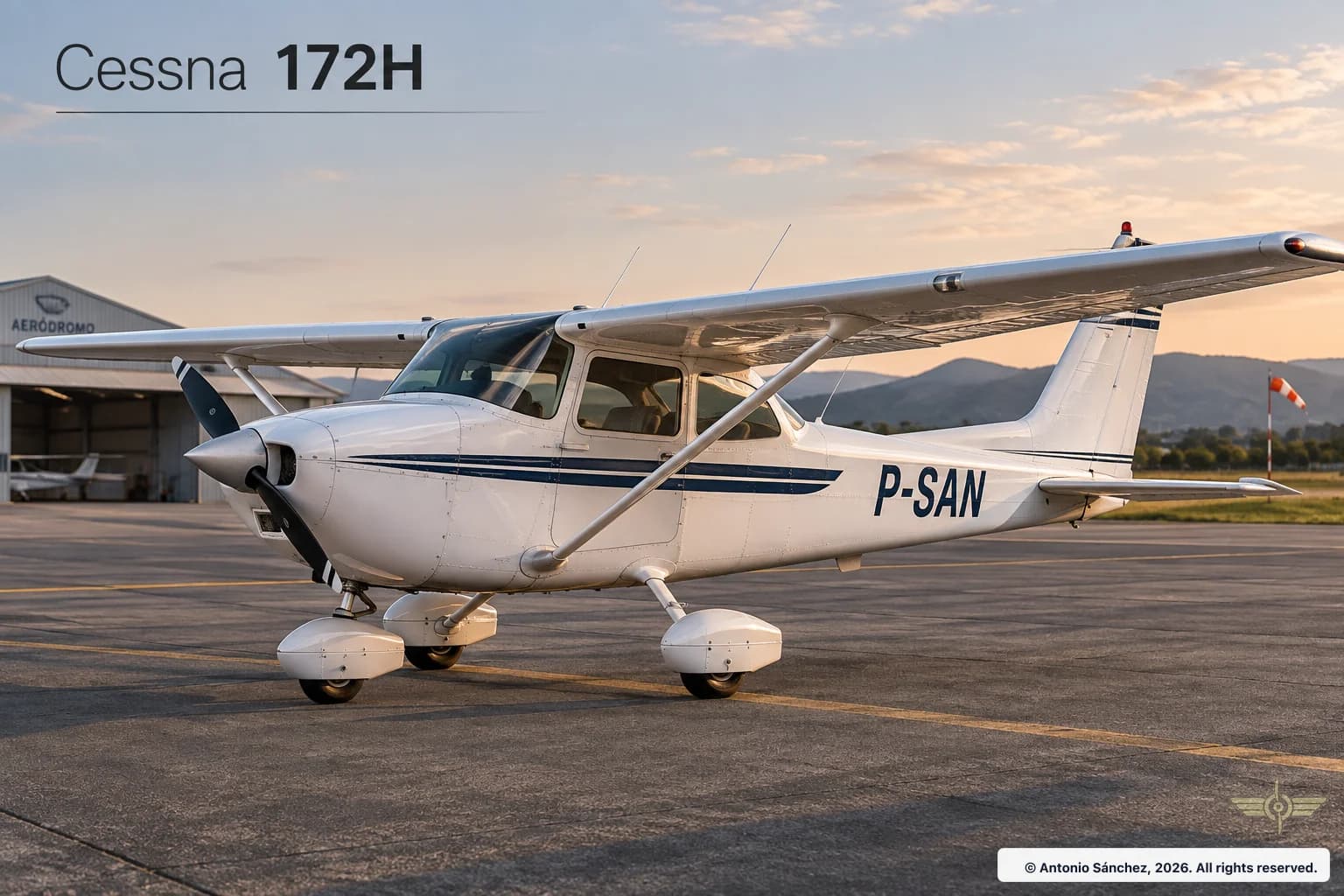
Cessna 172H Pilot Briefing Guide
As we prepare for our flight in the Cessna 172H, it's essential to conduct a thorough briefing that encompasses the aircraft's performance data outlined in the Pilot's Operating Handbook (POH). This briefing focuses on critical aspects such as weight and balance, take-off and landing techniques, and effective power management using the Lycoming O-320-H2AD engine.
Weight and Balance Pitfalls
Understanding weight and balance is fundamental for safe flight, particularly in a model like the Cessna 172H, which was produced in the late 1960s. The typical loading in flight schools often includes students, instructors, and various equipment, which can lead to miscalculations. Always verify your aircraft's specific weight and balance using the current Aircraft Flight Manual (AFM) and any supplements.
For student pilots, it’s common to underestimate the effect of baggage and fuel on weight limits. Ensure that you consider the total weight of passengers, baggage, and fuel, and remember that the maximum take-off weight for the 172H is 2,400 lbs. Additionally, assess the center of gravity (CG) limits carefully; loading the aircraft with the CG too far forward or aft can adversely affect handling characteristics.
Density Altitude and Hot-Day Take-off
When flying in warmer conditions, the concept of density altitude becomes crucial. A hot day can significantly affect engine performance and aircraft climb rates. The 172H, with its Lycoming O-320-H2AD engine, may not perform as well under high-density altitude conditions.
Before take-off, consult the POH for the specific take-off distances at various weights and temperatures. As density altitude increases, remember to factor in the longer distances required for take-off and the reduced climb performance. Always err on the side of caution—if in doubt, delay your departure or consider an alternative flight plan.
Flap and Power Technique Differences
A common source of confusion among students is the differing flap settings and power management techniques between aircraft types. In the 172H, we typically use flaps for both take-off and landing, but the settings and their impacts differ from other models.
For take-off, the recommended flap setting is zero degrees unless short-field performance is required. This technique maximizes the aircraft's climb performance. During landing, extend flaps to full (40 degrees) for better control and slower approach speeds. Be mindful that while the flaps enhance lift, they also increase drag, which can affect your landing distance.
Power management is equally important. The O-320-H2AD engine delivers optimal performance at full throttle, particularly during take-off. Be cautious not to reduce power too early; maintain full throttle until a safe altitude is reached, and then adjust to the desired cruise power settings.
Take-off and Landing Distance Briefing
When briefing take-off and landing distances, focus on the critical inputs from the POH. These factors include aircraft weight, flap settings, and environmental conditions such as wind and density altitude.
The POH provides charts that outline the required distances for take-off and landing based on these variables. For instance, at sea level and standard conditions, the take-off distance for a 2,400 lb aircraft is approximately 1,600 feet. However, as the weight increases or the temperature rises, the required distance will increase significantly. Always cross-reference your take-off and landing distances against the current conditions.
Cruise Fuel and Reserve Discipline
Understanding fuel management is essential for a safe flight in the Cessna 172H. The aircraft has a total fuel capacity of 40 gallons, with 36 gallons usable. It’s critical to maintain a discipline of fuel reserves; the rule of thumb is to always have at least one hour of flight time remaining upon reaching your destination.
During cruise, monitor your fuel flow and adjust power settings to optimize fuel consumption. The recommended cruise power setting for the 172H can vary, but typically, you'll find the best economy at around 65% power. Use the fuel consumption tables in the POH to maintain an accurate understanding of your fuel burn rates.
When to Say No-Go Despite Legal Limits
Lastly, it's vital to recognize when to say "no-go," even when legal limits are met. Factors such as weather conditions, aircraft performance, and personal comfort should always take precedence. If you’re uncertain about the operation of the aircraft under specific conditions, or if the weather doesn't align with your safety criteria, it is better to postpone the flight.
Always remember, safety is paramount, and no flight is worth the risk if conditions do not meet your standards of safety.
Using Pilot Sanchez
- Conduct a detailed briefing using the Cessna 172H briefing calculator.
- Utilize the How to plan with your plane guide for comprehensive flight planning.
- Review performance and operational data with the Planner walkthrough for your specific flight.
- After your flight, analyze performance through the Flight analysis guide.
- Manage your aircraft details using My Hangar.
About this model
The Cessna 172H sits in a unique transition era of Skyhawk production. While this model was produced between 1967 and 1968, it has remained a favorite among flight schools and private owners alike. Many European flying clubs operate H-models, often with modern avionics upgrades. These modifications help improve navigation and communication, yet the core performance characteristics as outlined in the original POH remain crucial for safe operations.
Flying the 172H requires an understanding of its historic performance data, as many of these aircraft are still actively in use today. As instructors, we must ensure that new pilots appreciate both the legacy of the 172H and the importance of adhering to the POH performance charts for safe and effective flying.