
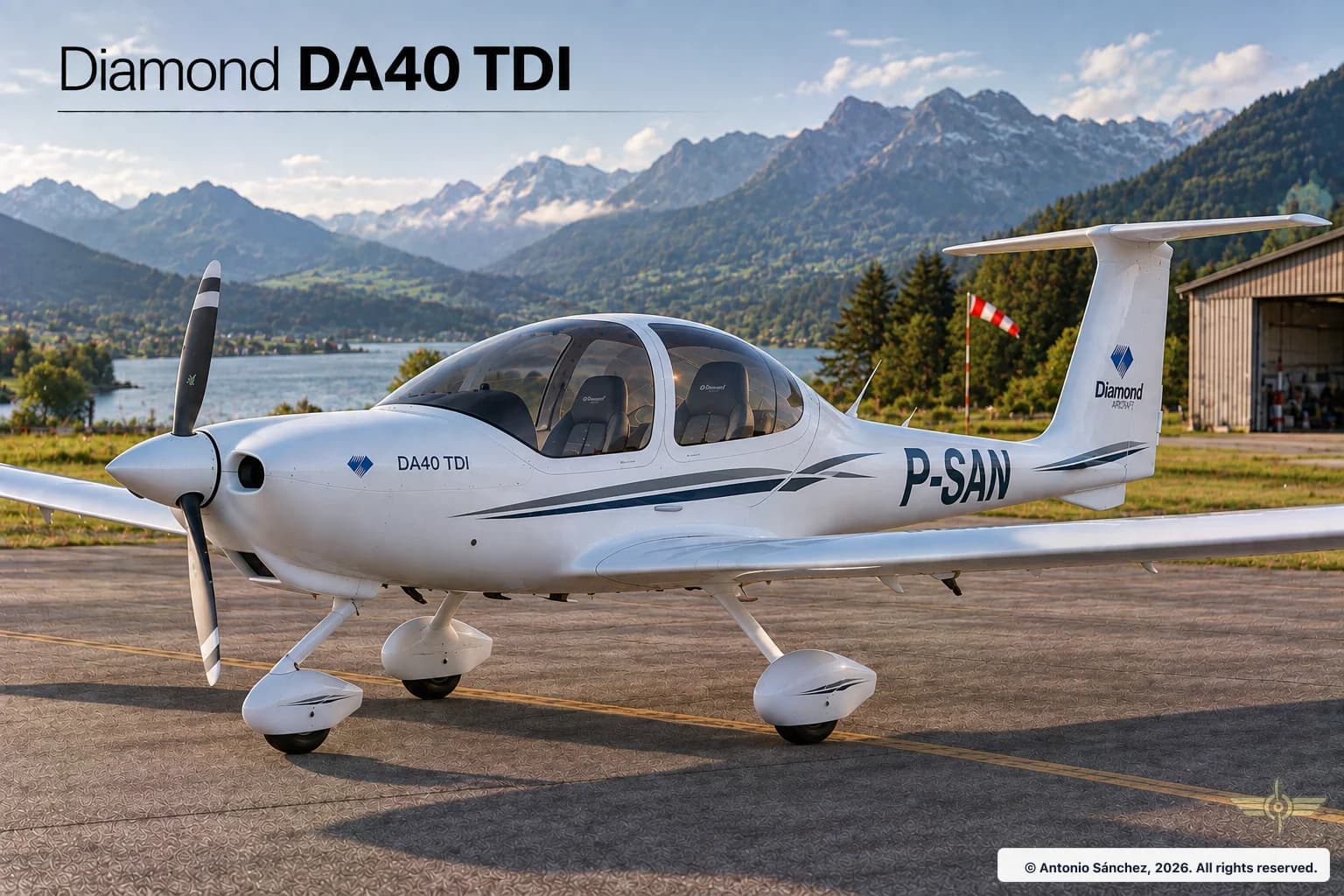
Briefing the Diamond DA40 TDI
As we prepare to brief the Diamond DA40 TDI, let's focus on the essential aspects that will ensure safe and efficient operation. This aircraft, powered by the Thielert TAE 125 (Centurion 1.7 diesel) engine, presents unique challenges and advantages. Our goal today is to cover critical performance data from the Pilot's Operating Handbook (POH) and establish a solid understanding of the aircraft's characteristics.
Weight & Balance Pitfalls
One of the first areas we must address is weight and balance. The DA40 TDI, like its Lycoming-powered counterparts, can easily be mismanaged when it comes to loading, especially in training environments. Typical school loading often includes multiple students and equipment, which can push the aircraft toward its maximum gross weight.
It is crucial to calculate the center of gravity (CG) properly. Remember that the diesel engine's weight distribution differs slightly from the Lycoming engine, affecting the CG position. Always verify the loading with the weight and balance chart in the POH. For private operations, where passengers and baggage might be more variable, ensure that you are aware of the limits and the implications of overloading, particularly with respect to performance and control during takeoff and landing.
Density Altitude and Hot-Day Take-off Mindset
Next, let’s discuss density altitude, a vital factor affecting performance. On hot days, the density altitude can increase significantly, resulting in longer takeoff distances and reduced climb rates. The DA40 TDI is sensitive to these changes, and it is essential to adopt a conservative mindset when evaluating performance under such conditions.
Always consult the takeoff performance charts in the POH, adjusting for the current temperature and pressure altitude. If the density altitude is high, you may need to consider reducing your load or delaying your flight until conditions improve. It's also wise to conduct a thorough pre-takeoff briefing, emphasizing the importance of engine management and power settings to maximize performance during departure.
Flap and Power Technique Differences
Students often confuse flap and power techniques between the DA40 TDI and other aircraft types. The DA40 TDI benefits from a unique configuration of flaps and power management, particularly during takeoff and landing.
For takeoff, the recommended flap setting is typically zero degrees. With the diesel engine’s torque characteristics, you must maintain a smooth application of power, avoiding abrupt throttle changes. During landing, the use of flaps can significantly affect approach speed and landing distance. A full flap configuration provides the best lift and drag combination, but pilots must be aware of the increased stall risk if they mishandle the power settings. Always remind your students to maintain a stable approach speed and be prepared for a go-around if the landing becomes unstable.
Take-off and Landing Distance Briefing
When briefing takeoff and landing distances, several factors in the POH need highlighting. The takeoff distance increases on hot days and at higher elevations, so ensure that pilots are familiar with the specific performance charts in the POH. The available runway length should always exceed the calculated takeoff distance, including a margin for error.
For landing, pay special attention to the landing distance chart. Factors such as weight, wind, and flap settings significantly impact the required landing distance. Encourage students to conduct a landing distance assessment before each flight, ensuring they account for all variables. Remember, it's not just about meeting the legal limits; it’s about ensuring safety and comfort during landings.
Cruise Fuel and Reserve Discipline
Fuel management is another critical area where discipline is essential. The DA40 TDI runs on Jet-A, and it’s important to be aware of its fuel consumption rates during cruise. Instruct students to use the fuel flow information in the POH to calculate their fuel requirements accurately.
Establish a reserve fuel policy that goes beyond the legal minimum. It’s prudent to plan for unexpected circumstances, such as diversions or extended holding patterns. A good rule of thumb is to maintain a reserve that allows for a safe landing at an alternate airport if necessary. The POH provides fuel flow data that should be a part of your flight planning process.
Saying No-Go Despite Legal Limits
Finally, we must address the importance of recognizing when to say no-go, even if we technically meet all legal limits. The DA40 TDI, while capable, has performance limitations that can be exacerbated by factors like high density altitude, adverse weather, or equipment malfunctions.
Encourage students to develop a personal minimums checklist that considers not just the aircraft’s capabilities but also their own experience and comfort levels. If conditions appear marginal, it’s better to delay the flight or seek alternative arrangements. Safety must always come first.
Using Pilot Sanchez
- Utilize the Diamond DA40 TDI briefing calculator for precise performance calculations.
- Follow the planner guide to structure your flight effectively.
- Use the flight analysis guide post-flight to evaluate performance and areas for improvement.
About this model
The Diamond DA40 TDI Star is a noteworthy aircraft in the realm of general aviation, particularly as one of the early diesel-powered four-seaters. Its introduction helped many pilots understand the intricacies of FADEC (Full Authority Digital Engine Control) power management. Unlike its Lycoming-powered siblings, the DA40 TDI features distinct climb rates and operational characteristics that demand attention.
In the transition to diesel power, pilots learned to adapt their flying techniques, especially regarding throttle management during critical phases of flight. The DA40 TDI's performance under varying conditions serves as a valuable educational tool, highlighting the need for precise flying and thorough pre-flight preparation. Each flight is not just an opportunity to fly but a chance to deepen our understanding of aircraft performance and safety.