American pilots have a name for it: the $100 hamburger. You fly somewhere close, eat at the airport restaurant and fly home. The burger was always the excuse; the flying was the point. The "$100" was roughly what the aircraft and the meal used to cost. A flight instructor in Pennsylvania was already calling it the "$200 hamburger" in 2008, and nobody has checked the price lately because nobody wants to know.
In Europe the excuse might be a tostada at a coastal aerodrome or a long lunch at the other end of a two-hour leg, but the maths is the same. Flying is expensive, and the most natural way to make it cheaper is to take friends along and split the bill. The good news is that EU rules explicitly allow it. The less good news is that there are conditions, and getting them wrong can turn your Sunday flight into an illegal commercial operation.
Here is what the rules actually say, in plain language, and what they leave to your judgement.
The rule in one paragraph
Cost-sharing is allowed under a derogation in the EU Air Operations Regulation, Article 6(4a)(a) of Regulation (EU) No 965/2012. In EASA's own summary: cost-shared flights by private individuals can be flown under the lighter non-commercial rules (Part-NCO), provided the direct costs are shared by all occupants of the aircraft, pilot included, and the number of people on board is limited to six, pilot included. There is no element of profit.
Those three ideas, everyone pays, maximum six, no profit, are the whole thing. Most mistakes come from misunderstanding one of them.
What counts as a "direct cost"
EASA's guidance material defines direct cost as "the cost directly incurred in relation to a flight, e.g. fuel, airfield charges, rental fee for an aircraft". In practice:
Can be shared: the rental of the aircraft for that flight, the fuel you burn, landing and parking fees for that trip.
Cannot be shared: the annual costs of keeping the aircraft. EASA defines those separately as "the cost of keeping, maintaining and operating the aircraft over a period of one calendar year". Your insurance, hangar, annual inspection or your share of the engine overhaul don't belong on the passengers' bill.
And the pilot pays too. The EU text says the cost is shared by all occupants "including the pilot". It doesn't spell out that the split must be equal, but an equal split is the simplest way to show there is no profit, and some authorities have gone further. In the UK, which now has its own rules, the pilot's contribution must since 1 October 2025 be no less than the total direct cost divided equally by the number of people on board.
A simple, purely illustrative example: if the rental and fuel for a day trip come to €480 and there are four of you on board, everyone pays €120, including the person in the left seat. If the pilot ends up paying nothing, or less than everyone else while the passengers cover the rest, you're drifting into territory that looks a lot like a paid flight.
Your licence: what PPL and LAPL holders need to know
Cost-sharing doesn't need a commercial licence, because the flight remains non-commercial. But the normal licence rules still apply, and two are worth checking before you take passengers at all:
Passenger recency (FCL.060). To carry passengers as pilot in command you need at least three take-offs, approaches and landings in the preceding 90 days in an aircraft of the same type or class.
LAPL(A) limits (FCL.105.A). A LAPL(A) holder flies single-engine piston aeroplanes or TMGs with a maximum take-off mass of 2,000 kg or less, with no more than three passengers (four people on board in total). LAPL holders can only carry passengers after completing 10 hours as pilot in command after the licence is issued.
So a LAPL holder in a four-seater can share costs with up to three friends; a PPL holder in a six-seater could, in principle, share with five. Whether a full six-seater on a hot day out of a short strip is a good idea is a different question, and that's where your weight and balance and performance calculations come in.
Online platforms and advertising
Several European websites match pilots with passengers who want to share a flight. EASA has acknowledged these platforms and, rather than banning them, worked with national authorities and the platforms on a voluntary safety charter. The text that platforms are expected to show passengers is worth quoting, because it's honest:
"Safety rules for cost-shared flights are not as strict as they are for commercial air transport flights. This means that there is more risk involved in taking a cost-shared flight than buying a ticket from a commercial airline operator."
The same charter compares the risk of general aviation flights to road transport, reminds pilots that they are responsible for making sure the flight is insured for passengers, and, in a line that will make every instructor smile, says the pilot should inform the passenger that toilets are not available on board.
National authorities can add their own guidance, and the UK now has detailed rules on what an advert must say. Before you advertise a cost-shared flight from Spain or anywhere else, check what your authority currently says, and keep the arrangement clearly private and non-commercial.
The real risk isn't legal, it's pressure
The charter's code of conduct for pilots reads like a list of accident reports turned inside out:
The pilot is the only one with authority over the flight, and passengers should be told from the start that it can be cancelled at any time, for any reason.
Weather is a primary reason for accidents in non-commercial GA, so pilots should brief passengers on the forecast the day before, and the passenger's presence on the day "shall not make the pilot reluctant to cancel a flight".
The pilot can refuse to board anyone, at any time, without explanation.
Read that list again and think about how it feels when four people have taken a day off, driven to the aerodrome, and are standing next to the aircraft with a cool bag. That's the moment the rules are written for. Some practical habits that help:
Agree the "no-go" rule in advance. Tell passengers when you'll make the go/no-go decision and that there's no charge if the flight doesn't happen.
Get real weights. Ask each passenger for their weight and baggage beforehand, and do the weight and balance with those numbers, not with a hopeful guess. If you fly a Cessna, our briefing tool handles weight and balance and performance from the POH data.
Plan the money as carefully as the route. Write down the direct costs before you go so the split is transparent. Our VFR planner helps with the route and the fuel, which is usually the biggest direct cost.
Brief like you mean it. Seat belts, doors, what not to touch, when not to talk (on the radio and during take-off and landing) and what to do in an emergency landing.
FAQ
Can a private pilot share flight costs with passengers in Europe?
Yes. Under Article 6(4a)(a) of Regulation (EU) No 965/2012, private individuals can share the direct costs of a flight in an other-than-complex aircraft, as long as all occupants including the pilot share them, there are no more than six people on board and there's no profit.
What costs can be shared on a cost-shared flight?
Only direct costs of that flight, such as fuel, airfield charges and the aircraft rental fee. Annual costs like insurance, hangarage and maintenance can't be included.
Does the pilot have to pay a share?
Yes. EU rules say the direct cost is shared by all occupants, including the pilot. An equal split is the clearest way to show there's no profit.
Can a LAPL holder do cost-sharing flights?
Yes, within LAPL limits: no more than three passengers (four people on board), aircraft of 2,000 kg MTOM or less, and only after 10 hours as PIC following licence issue. Passenger recency (three take-offs and landings in 90 days) applies as for any pilot.
Sources
EASA: Flying in the EU, Air OPS update 2017 (cost-shared flights)
EASA: Easy Access Rules for Air Operations (Regulation (EU) No 965/2012)
EASA: Annex to the Safety Charter for non-commercial General Aviation (cost-sharing platforms)
EASA: Easy Access Rules for Aircrew (Part-FCL, FCL.060 and FCL.105.A)
Wikipedia: $100 hamburger (citing The New York Times and the Beaver County Times)
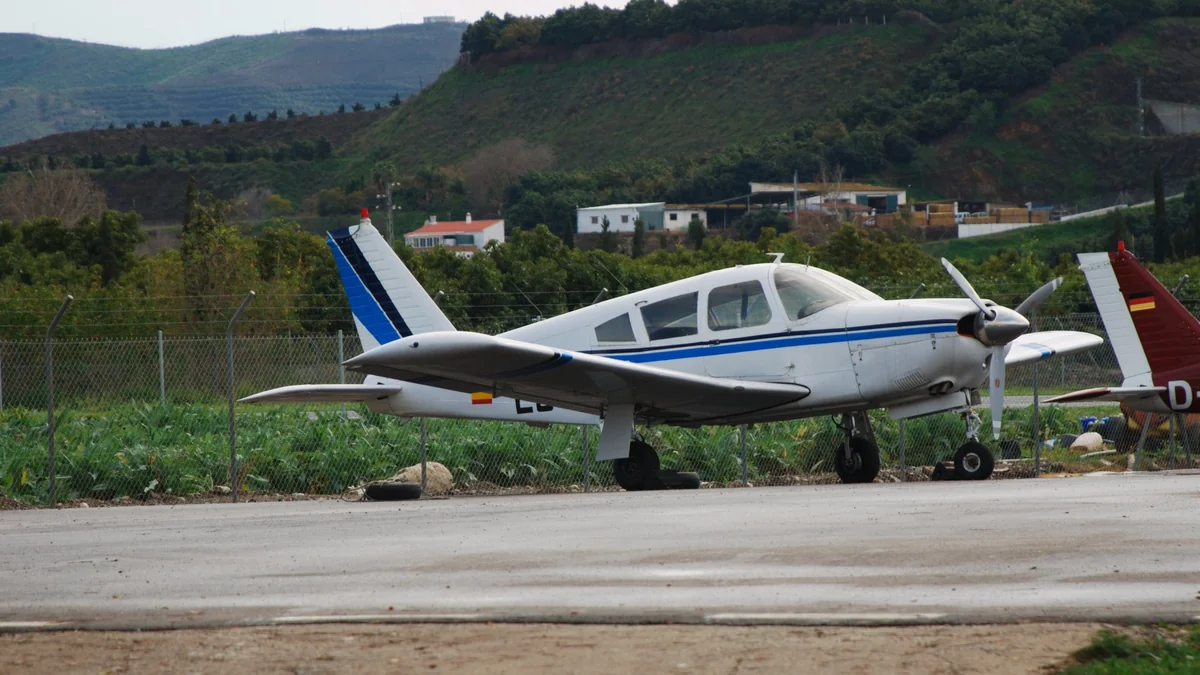
Cover: light aircraft at La Axarquía aerodrome (Vélez-Málaga). Photo by Antonio, Wikimedia Commons, licensed CC BY-SA 2.0, cropped.
